
SURGE PROTECTION / PRODUCT CATEGORY
Choose surge protection around your electrical system, installation location and equipment. Compare AC power, solar PV and signal protection, then confirm the ratings and coordination your project needs before specifying a model.
Discuss your SPD requirements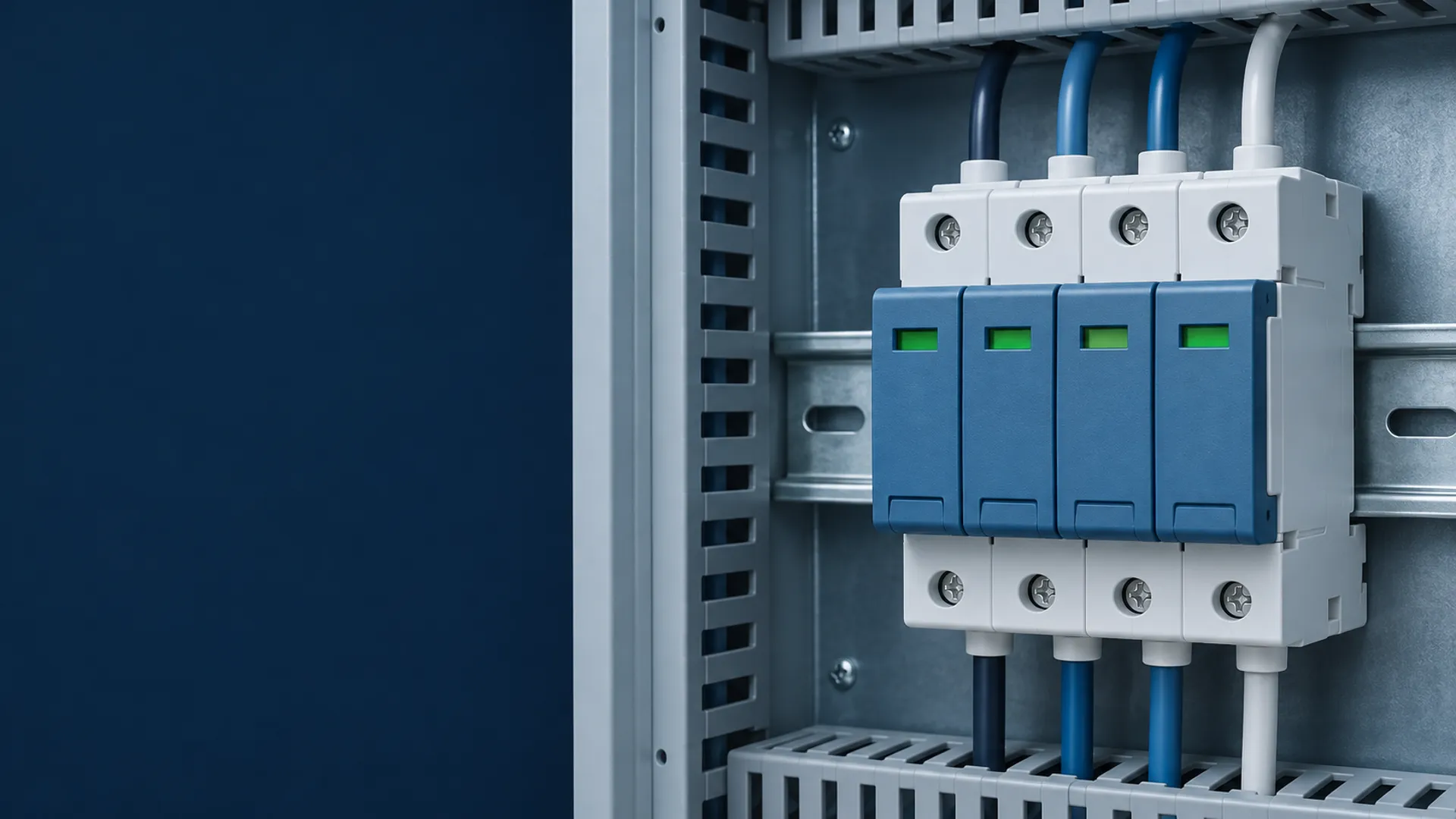
Define the supply voltage, earthing arrangement and available short-circuit current before choosing your surge protection assembly. Check enclosure space and access for inspection.
Protect the DC and AC sides with devices rated for their respective circuits. PV selection starts with the maximum cold-weather array open-circuit voltage.
Build a clear specification for each target market. Request model-specific datasheets, dimensional drawings, compliance documents and replacement-cartridge information.
An SPD limits transient overvoltage by providing a controlled path for surge current. It helps reduce the voltage stress reaching connected equipment during lightning-induced or switching events. Its performance depends on the device, the installation and the wider bonding system.
Your SPD works alongside circuit protection and earthing. It does not replace a circuit breaker, an RCD or a complete external lightning protection system. A sustained supply overvoltage requires a different protection assessment; surge protection is intended for transient events.
Start with the circuit you need to protect. These are functional categories, not interchangeable product ratings. Confirm availability and the exact configuration against the proposed model datasheet.
For installations where lightning current duty is required by the protection design. Review the impulse current rating Iimp, protection modes and supply-system compatibility. Placement is determined by the installation assessment.
A combined device with declared Type 1 and Type 2 performance can simplify a coordinated design. Verify both sets of ratings rather than assuming every combined unit has the same capability.
Commonly considered at distribution boards for induced lightning and switching surges. Compare nominal discharge current In, maximum discharge current Imax and voltage protection level Up.
Provides an additional protection stage close to sensitive loads where required. Select and coordinate it with upstream SPDs following the manufacturer's instructions; it is not a universal replacement for upstream protection.
Use a device specifically rated for photovoltaic DC circuits. Confirm Ucpv, PV short-circuit suitability, connection arrangement and environmental conditions before selecting a configuration.
Choose around the interface: operating voltage, signal current, frequency or data rate, connector and shielding. A power SPD cannot be substituted for a communications-line protector.

Generic product-family illustration
Match the SPD to the actual supply and earthing system. TN, TT and IT arrangements can require different protection modes and connection concepts. Pole count alone does not establish suitability.
For single-phase and three-phase installations, compare the declared continuous operating voltage with the voltage across each protection mode. Include temporary overvoltage behavior and upstream protection in your review. Ask for the approved connection diagram for the exact model.
Maximum continuous operating voltage. Select it for the voltage actually applied to the protection mode. For PV, account for maximum array voltage at the lowest expected temperature.
Voltage protection level under declared test conditions. Compare it with the equipment withstand requirement and account for additional voltage associated with connection conductors.
Discharge-current ratings associated with specified surge tests. Compare like-for-like waveforms and test duties; a larger headline current does not alone prove better system protection.
Impulse-current rating relevant to Type 1 duty. Check the specified waveform and the rating per protection mode or pole before comparing different products.
Confirm the declared short-circuit capability and the required backup fuse or circuit breaker. Use the manufacturer-approved combination for your available fault current.
A local indicator supports routine inspection. A remote contact can support monitoring where provided. Verify contact ratings and the meaning of each indication for the model.
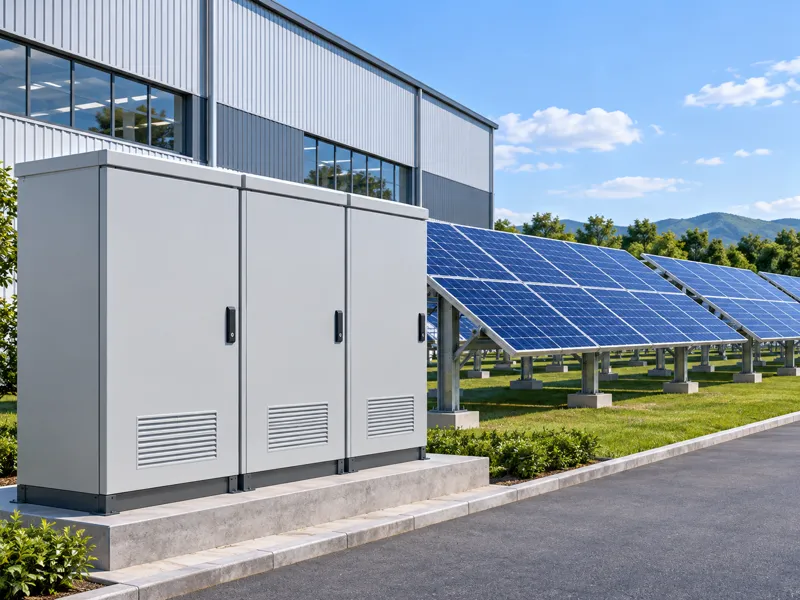
Long outdoor cable routes and exposed arrays make surge protection an important part of a PV installation assessment. Review the array-to-inverter DC circuit, inverter AC output and any monitoring or communication connections as separate protection paths.
An AC-rated SPD is not automatically suitable for a PV DC circuit. Check the PV-specific voltage rating, failure-mode behavior and applicable test documentation. Coordinate protection positions with the inverter manufacturer and the project's lightning protection design.
Review incoming power, subdistribution and sensitive building services. Include lifts, HVAC controls and communication interfaces in the protection assessment.
Assess control panels, drives, instrumentation and network connections together. Switching sources within the facility can be relevant alongside external surge exposure.
Review power feeds and metallic communication paths that cross protection-zone boundaries. Coordinate interface protection without compromising signal performance.
Record AC or DC, nominal and maximum voltage, frequency where relevant, earthing system and number of conductors. Include the installation location and equipment to be protected.
Establish whether lightning current duty is required, identify zone boundaries and consider external lightning protection. Let the project assessment determine the protection stages.
Check Uc or Ucpv, Up and the appropriate current-duty ratings. Review equipment withstand, temporary overvoltage behavior and environmental limits.
Confirm the upstream protective device, fault-current conditions and coordination with other SPDs. Avoid combining devices solely on matching nominal current values.
Use the model instructions for conductor size, routing, connection lengths, mounting and torque. Plan safe maintenance access and local or remote indication.
Approve the exact part number, datasheet, connection diagram and relevant certificates or reports. Keep the approved revision with the panel or project records.
A staged protection design manages different duties at different points in the installation. Type 1, Type 2 and Type 3 labels describe test and application contexts; they do not mean that arbitrary devices can be combined without checking coordination.
Use the manufacturer's coordination guidance for device combinations and any required separation or decoupling. Protection quality also depends on bonding, cable routes and all conductive services entering the protected area. An unprotected signal cable can leave another path for transient stress.
Connection conductors add inductive voltage during a fast surge. Keep routing direct and follow the manufacturer's limits on connection length and conductor cross-section. Avoid unnecessary loops and review the relationship between the SPD, protective earth and the protected circuit.
A qualified electrical professional should select and install the assembly under the applicable local requirements. Use the exact model diagram for terminal assignments. Generic illustrations on this page are not wiring instructions and should not be used to determine live connections.
Include the SPD indicator in your inspection schedule. Read it according to the model instructions; appearance and status conventions are not identical across all products.
For pluggable designs, confirm the compatible cartridge reference. Similar dimensions do not establish electrical compatibility. Follow isolation and replacement instructions.
Record inspection dates, indication changes and replacement details. After a significant event, assess the installation according to the manufacturer's maintenance guidance.
For a useful model recommendation, share your single-line diagram, circuit voltage, earthing arrangement, installation position and destination market. Add the available fault current, upstream protection details and any specified lightning or surge-protection requirements.
For purchasing, identify quantity by variant, documentation requirements, labeling needs and replacement spares. Request confirmation of the proposed model before agreeing delivery or branding details. Model availability, approvals and commercial terms should be confirmed in the quotation.
Request model selection supportAsk for a current datasheet, installation instructions, dimensional drawing and the applicable declaration, certificate or test report. Check that the part number, voltage, protection type and configuration match your intended order. A standard reference in marketing copy is not itself proof of third-party certification.
IEC-based Type designations and UL 1449 installation categories should be evaluated in their own framework. For a North American project, verify the listing, ratings and conditions required by the local specification rather than assuming an IEC label is equivalent.
Use primary technical references to understand the selection process, then verify the proposed device using its own documentation. The following resources provide additional context; they do not establish approvals for products shown on this page.
Read the surge protection basics Review UL testing and certificationNo. Surge protection addresses transient overvoltage within its declared limits. Overload, short circuit, electric shock and sustained overvoltage require their own protection measures.
Start with the installation's lightning and surge assessment. Determine the required duty and position, then check the model ratings and coordination requirements.
A combined device can be useful where both duties are required. Suitability still depends on system voltage, earthing, current duty, Up and installation constraints.
Only if the manufacturer explicitly rates that device for the intended PV application. Select a PV-specific device using the array voltage and fault conditions.
Uc describes the maximum continuous operating voltage. Up describes the declared voltage protection level under test conditions. They serve different selection purposes.
Current rating alone is insufficient. Compare test waveform, duty, protection mode, Up, coordination and compatibility with your installation.
No. The breaker provides overcurrent protection. Follow the SPD instructions for the required upstream or backup protective device.
Coverage depends on the installation, cable routes, exposure and equipment. Additional coordinated stages or signal protection may be needed.
Assess metallic interfaces entering the equipment or protection zone. Choose a protector that preserves the interface's electrical and communication performance.
It indicates the condition defined by that model's instructions. Check it routinely and follow the specified action when replacement is indicated.
Do not assume compatibility from shape. Use the replacement cartridge approved by the device manufacturer for the installed base and rating.
Availability is model-dependent. Confirm the ordering suffix, contact arrangement, electrical rating and monitoring requirements before specifying.
Request documents appropriate to the destination market and specification. Check exact model coverage and distinguish declarations from certificates and test reports.
Supply circuit voltage, earthing, required SPD type, installation position, fault-current information, destination market and quantity, plus any project specification.
Request the exact model photographs, datasheets, dimensions and ratings before final product approval.
Prepare the circuit type and voltage, earthing system, required protection duty, installation position, available fault current and upstream protective device. Add the equipment sensitivity, enclosure environment, communication interfaces and destination market.
Attach the relevant drawings or specification where available. If a parameter is unknown, identify it clearly so the technical review can resolve it before a model is approved. Include the requested quantity, document package and any spare-cartridge requirements.
Bring your electrical system details and project requirements together. Request a model review, confirm the supporting documentation and agree the exact configuration before ordering. Your installation conditions should drive the selection from the first enquiry.
Start your SPD enquiry