
DC SWITCHING & ISOLATION
Specify the right disconnect for your DC system.
Compare isolation formats for solar PV, inverter equipment and DC panels. Start with your circuit requirements, then confirm the electrical ratings and installation details for the selected model.
Discuss your DC isolator requirementsDC ratings • Pole configuration • Installation environment
UNDERSTAND THE FUNCTION
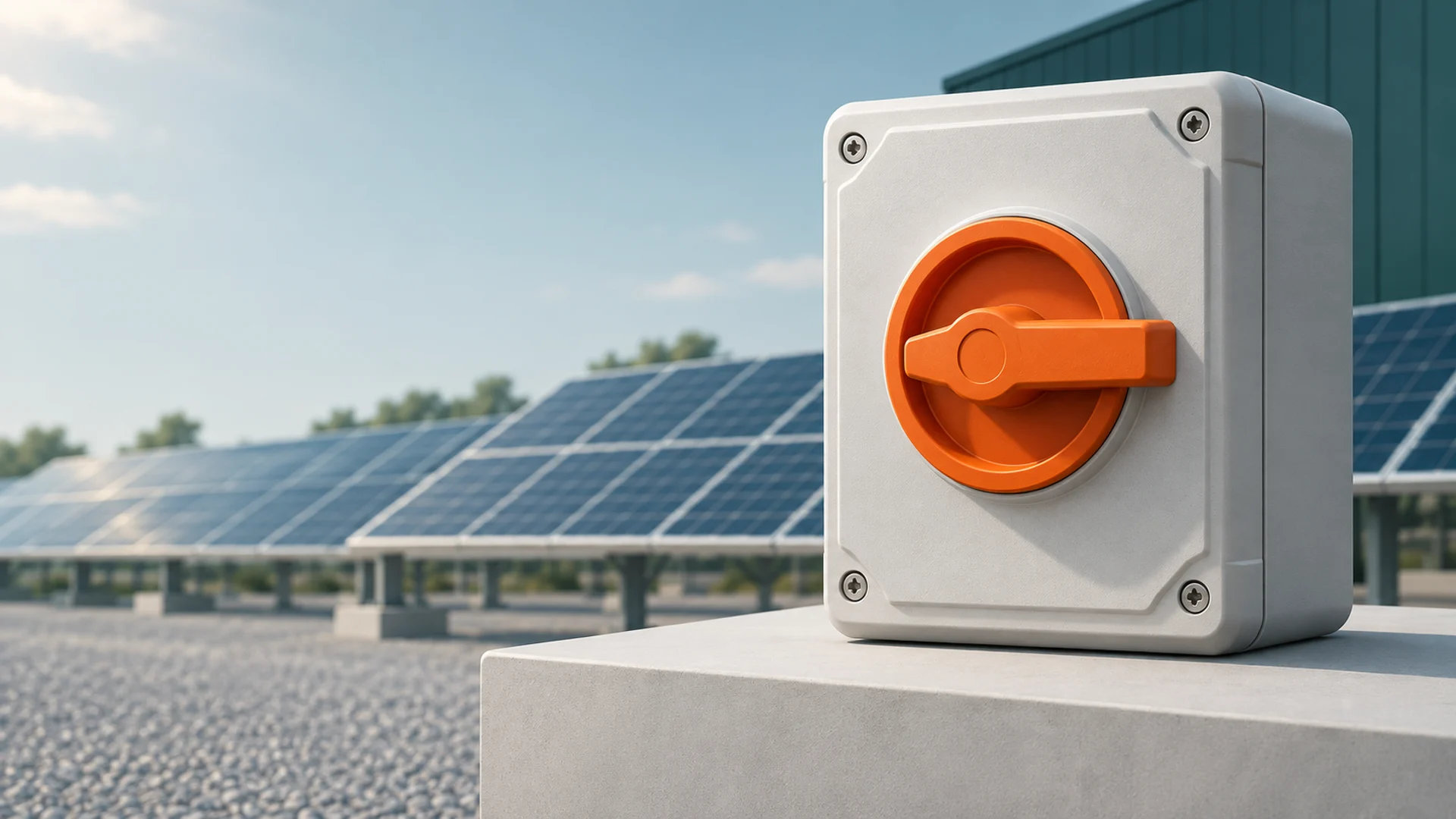
A DC isolator provides a means to disconnect a DC circuit for isolation. A switch-disconnector also has a defined switching duty: whether it can break a particular load depends on its declared DC rating and utilization category.
Choose the device for the actual circuit. An AC rating does not establish DC suitability, and an isolator does not replace correctly coordinated overcurrent protection.
Identify every energy source and the part of the system that needs to be isolated.
Match voltage, current, utilization category and the manufacturer's pole arrangement.
Follow the approved shutdown procedure and verify the absence of voltage before work.
COMPARE CONFIGURATIONS
These are configuration families to discuss for your project. Availability, electrical performance and accessories must be confirmed for the proposed model.
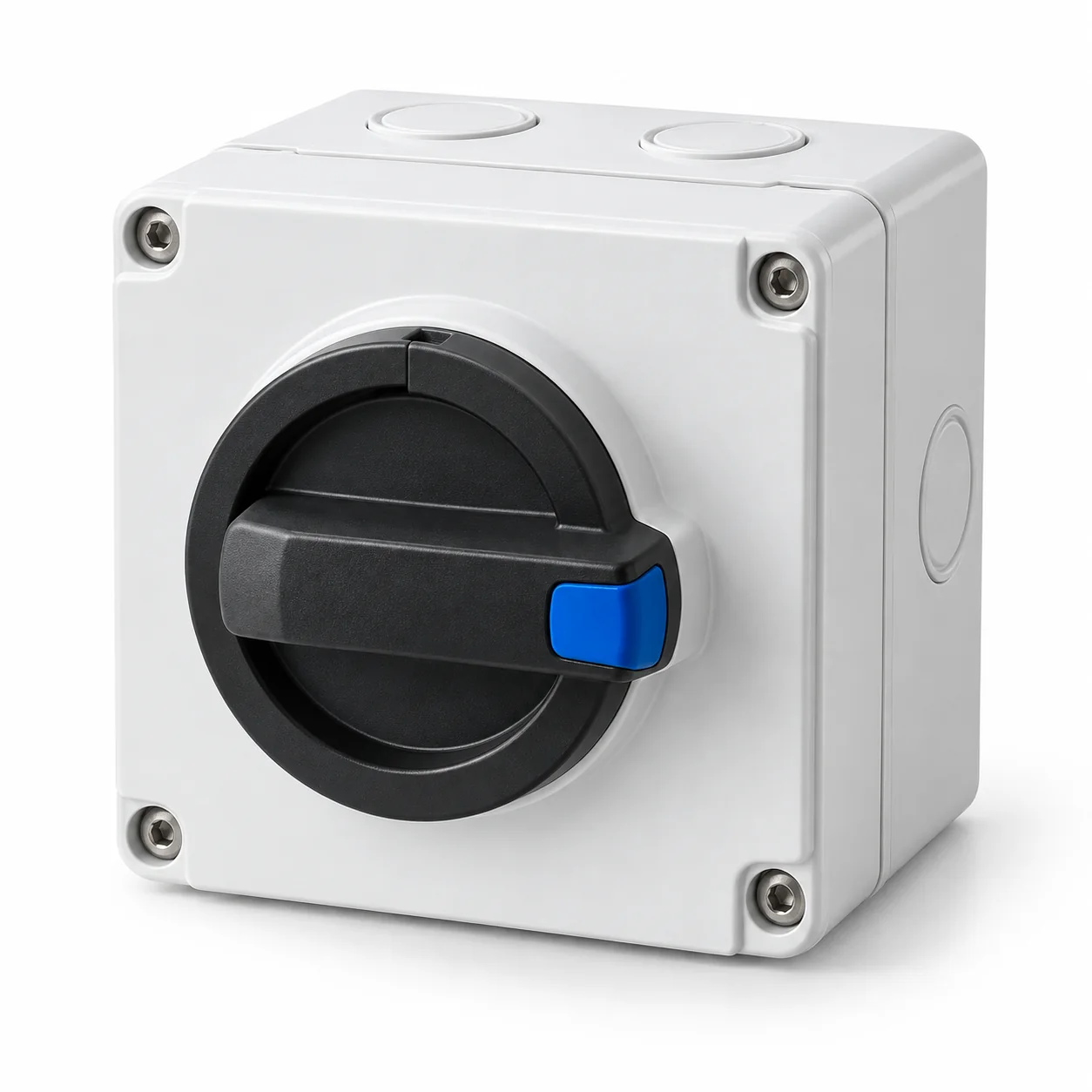
A self-contained enclosure suits a local operating point beside equipment. Check ingress protection, cable entry, mounting direction, lock-off provision and the enclosure's environmental limits.
A compact arrangement can fit within a suitable distribution or combiner enclosure. Confirm rail compatibility, terminal access, heat dissipation and the completed assembly's protection.
A panel-mounted device can support operation through a cabinet door. Verify the shaft, handle, interlock, door thickness and clearances for the selected assembly.
ELECTRICAL SELECTION
Use the maximum circuit voltage expected under the design conditions. For PV, include the relevant temperature correction to string open-circuit voltage; inverter operating voltage alone is not enough.
Check the device's rated operational current at the required DC voltage and category. Consider installation temperature and enclosure derating, together with the circuit's design-current requirements.
Use only the manufacturer's approved connection diagram. A multipole device may require specific series connections; pole count alone does not define the number of independent circuits.
Confirm whether operation under load is required. Coordinate upstream or associated short-circuit protection using the declared ratings and instructions; do not assume an isolator interrupts a fault.
WHERE IT FITS
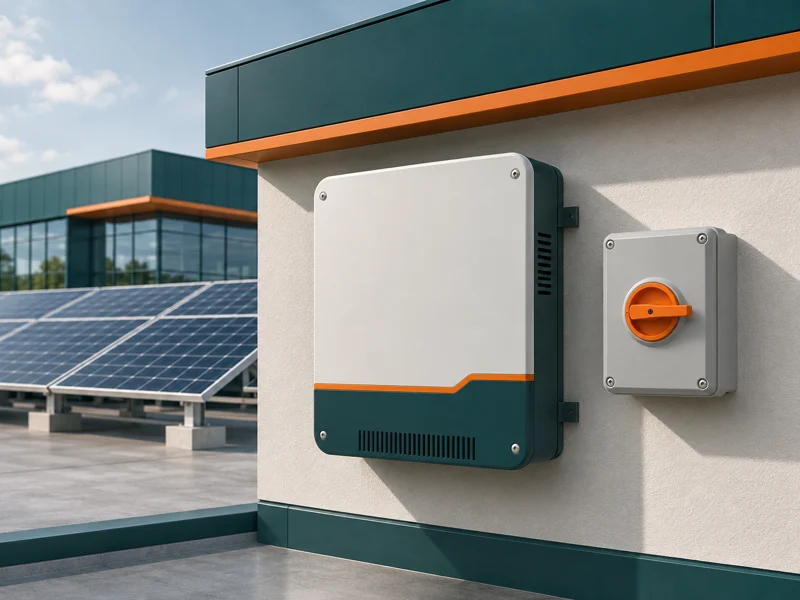
Define the string layout, MPPT arrangement and isolation boundaries. Verify PV-specific duty, voltage, current and installation requirements with the system designer.
Match the disconnector to the enclosure and assembly. Keep cable access, service clearances and operating-handle access in the selection discussion.
Battery and industrial DC circuits can have different fault levels and current directions. Assess those circuits separately; PV suitability does not automatically establish battery suitability.
COMPARE WITH EVIDENCE
Use this checklist when comparing datasheets or requesting a proposal. Category descriptions do not establish a model-specific rating.
Rated operational voltage, current and utilization category for your DC circuit.
Pole arrangement, polarity restrictions and permitted independent circuits.
Ambient temperature, derating, mounting position and terminal conductor range.
IP rating, cable entries, UV exposure limits and OFF-position lockability.
Conditional short-circuit rating and specified protective device, where applicable.
Exact model, standard, certificate scope and market-specific acceptance.
INSTALLATION DETAILS
Check water ingress, condensation, sunlight, corrosion and the suitability of all cable entries. An IP rating is one part of environmental selection; it does not describe every exposure condition.
Keep the operating handle accessible to authorized personnel. Confirm the OFF-position locking arrangement and integrate it with the site's isolation and lockout procedure.
Use the specified conductor preparation and tightening torque. Qualified personnel should install and inspect the assembly in accordance with the product instructions and applicable local requirements.
FROM REQUIREMENT TO REVIEW
Provide the application, maximum DC voltage, design current, source type, string or circuit arrangement, operating duty and installation environment.
Review the proposed model's datasheet, wiring arrangement, mounting dimensions, accessory requirements and evidence relevant to your destination market.
Agree the exact configuration, quantity, documents, packaging and delivery requirements. Check availability and customization against the final proposal.
YOUR QUESTIONS, ANSWERED
What is the difference between a DC isolator and a DC circuit breaker?
An isolator provides an isolation function. A suitably rated switch-disconnector also performs specified switching duties. A circuit breaker includes a protective interruption function. Select and coordinate these roles using the specific device documentation.
Can I use an AC isolator on a DC circuit?
Do not infer DC suitability from an AC rating. DC switching places different demands on arc interruption. Use a device with declared DC characteristics for the intended voltage, current, utilization category and connection arrangement.
Can every DC isolator be operated under load?
No. Confirm the manufacturer's declared load-switching capability and operating instructions. A device described simply as an isolator must not be assumed to have the required load-breaking duty.
How do I choose the number of poles?
Follow the manufacturer's tested connection arrangements and the system's isolation requirements. Some devices use multiple poles in series to achieve a voltage rating. Do not improvise bridging or assume each pole is an independent circuit.
Does a high IP rating guarantee outdoor suitability?
No. Also review sunlight exposure, temperature, condensation, corrosion, mounting orientation and the installed cable glands. The completed installation must maintain the intended enclosure protection.
Can a PV isolator be used for a battery system?
Only if its declared characteristics cover that application. Battery systems may involve higher fault currents, bidirectional flow and different switching duty. Request a specific assessment rather than transferring PV ratings.
What does IEC 60947-3 tell me?
IEC 60947-3 covers low-voltage switches, disconnectors, switch-disconnectors and fuse-combination units. Mentioning the standard does not itself prove that a product is independently certified or accepted in your market.
What should I include in an enquiry?
Share maximum DC voltage, design current, application, circuit arrangement, mounting format, environment, destination market and quantity. Add the required documents and preferred handle, enclosure or accessory configuration.
CONTINUE YOUR SELECTION
Explore the broader isolator-switch category for machinery, panels and DC applications.
View isolator switchesReview related component families when defining your solar PV protection and isolation scope.
Explore solar & storageConsult manufacturer literature for rating principles. This reference is not certification evidence for BDDKG products.
Read the ABB technical paperDEFINE YOUR DC ISOLATION REQUIREMENTS
Send your voltage, current, circuit arrangement, installation environment and destination market to BDDKG. Include quantities and required documentation so the discussion starts with the details that matter.
Contact BDDKG about DC isolators