
CABLE ENTRY & CONNECTION
Secure your cable entry. Specify the right seal.
Compare cable gland materials and functional designs for control panels, machinery and electrical enclosures. Start with your cable diameter, entry thread and operating environment.
Discuss your cable entry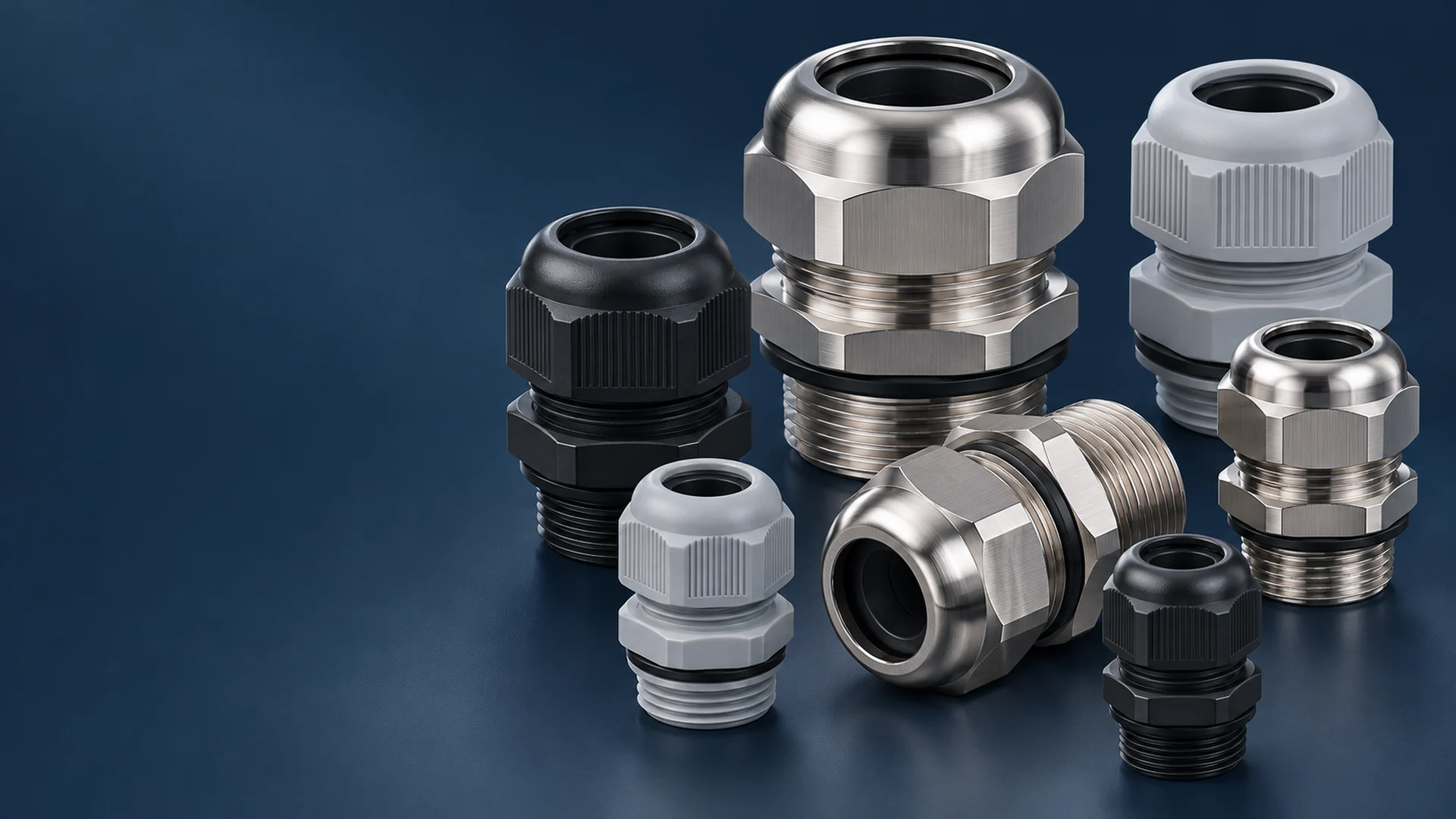
Actual product design varies.
A correctly selected sealing insert helps protect the entry against the specified dust and water exposure.
Match the clamping range and retention performance to your cable and installation requirements.
Confirm the thread form, entry dimensions, wall thickness and installation accessories.
A cable gland is a fitting that secures a cable where it enters equipment or an enclosure. Depending on its construction, it can provide sealing, retention, armour termination or a connection to the cable screen. These functions are model-specific: a standard sealing gland does not automatically provide EMC bonding or armour termination.
Choose the gland as part of the complete entry assembly. Your cable jacket, enclosure wall, sealing washer and locknut can all affect installation suitability. Verify the product datasheet and assembly instructions before specifying a rating.
Use these common design families to narrow your enquiry. Availability and exact specifications must be confirmed for the selected product.
Consider for general cable entry where a lightweight, non-metallic fitting suits the application. Check material grade, UV suitability, temperature limits and chemical exposure.
Consider when a metal fitting is preferred for mechanical robustness. Confirm plating, seal compatibility and the corrosion conditions of the installation.
Consider for environments requiring a specifically verified stainless grade. Confirm suitability for chemicals, cleaning methods and any salt exposure.
Designed to connect a cable screen to the entry system. Verify shield diameter, contact method and the enclosure bonding arrangement.
Select a design compatible with your armour construction and cable dimensions. Check armour clamping, bonding and sealing requirements.
Multi-hole, split and hazardous-area designs require dedicated selection. A general-purpose gland must not be substituted for a certified application.
Record actual outside diameter and tolerance. For armoured or screened cables, also record the dimensions needed by the termination design.
Confirm Metric, PG or NPT thread, nominal size, pitch or taper, thread engagement and enclosure wall thickness.
List temperature, water and dust exposure, vibration, chemicals and sunlight. Review the complete gland and sealing arrangement.
Confirm clamping range, installation torque, accessories, performance data and required approvals for the exact model.
A thread size is not a cable diameter. Products sharing the same entry thread may accept different cable diameters. Compare the actual datasheets before ordering.
Metric / PG / NPT
Verify: form, nominal size, pitch or taper and effective thread length.
Minimum and maximum outside diameter
Verify: the selected sealing insert and cable tolerance.
Ingress protection and operating conditions
Verify: test conditions, accessories, assembly method and temperature.
Do not assume all glands in a material family have the same IP rating, temperature range or certification. Ask for model-specific documentation.
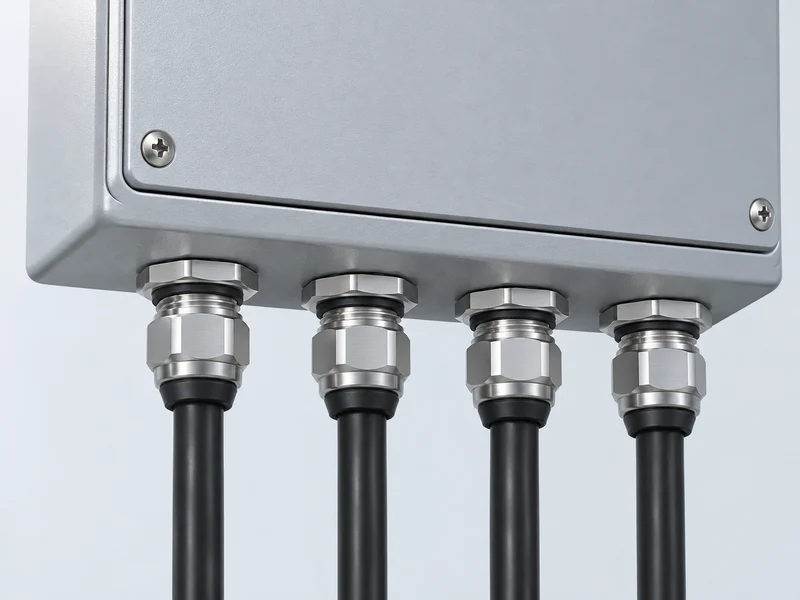
Control panels: coordinate cable entry spacing, enclosure access and retention requirements.
Industrial machinery: assess vibration, cable movement, oils and cleaning exposure.
Outdoor equipment: confirm UV suitability, temperature cycling and the required weather sealing.
Screened cable systems: use a verified EMC design and a suitable enclosure bonding path.
Confirm thread compatibility, available engagement and washer material. An enclosure interface may need its own seal to achieve the specified protection.
Check both thread interfaces and the effect on mounting, clearance, approvals and environmental sealing.
Close unused entries with a compatible rated accessory. An open spare hole can compromise enclosure protection.
How do I choose the right cable gland size? +
Measure the cable outside diameter, then choose a gland whose stated clamping range covers it. Separately confirm the enclosure entry thread and the installation conditions.
Are Metric, PG and NPT interchangeable? +
No. They have different thread dimensions or forms. Identify the actual entry before selecting a gland or an approved adapter.
Does M20 mean a 20 mm cable fits? +
No. M20 identifies a nominal metric entry thread. The usable cable range depends on the specific gland and sealing insert.
Does an IP68 rating guarantee any underwater use? +
No. Check the manufacturer's specified immersion conditions and assembly requirements. A rating alone does not define unlimited depth or duration.
When should I use an EMC cable gland? +
Consider an EMC gland when the design requires a connection to the cable screen. Verify the contact range and bonding requirements for the complete system.
Can a standard cable gland terminate armoured cable? +
Only if the model is designed for that armour and cable construction. Confirm armour termination, dimensions, bonding and sealing requirements.
Can one gland seal several cables? +
Use a purpose-designed multi-hole insert or cable entry system. A standard single-hole insert is not intended to seal a bundle of separate cables.
What information should I send with an enquiry? +
Send cable construction and diameter, thread details, enclosure wall thickness, environment, target rating, quantity and any required model-specific approvals.
Prepare your cable diameter, entry thread, installation environment and quantity. Use these details to request a suitable model and its supporting datasheet.
Contact our team