
DC POWER • SOLAR PV • ENGINEERED SELECTION
Protect your DC equipment with surge protection selected for the actual circuit. Compare photovoltaic and general DC applications, understand the ratings that matter, and prepare a clear specification for your inverter, combiner box or DC power panel.
Discuss your application ↗
Browse applications / Selection guide / Compare ratings / FAQs
Specify the DC side of your solar installation with the inverter voltage, maximum open-circuit voltage and system earthing in view.
Match the protection arrangement to your enclosure, terminal capacity, backup protection and maintenance access.
Compare equivalent ratings and request model-specific documentation before you approve a sample or repeat order.
A DC surge protective device limits transient overvoltage and diverts surge current through its protective paths. You select it to reduce the electrical stress reaching sensitive equipment during lightning-related or switching events. Its protective performance depends on the complete installation, including bonding, conductor routing and coordination with other protective devices.
An SPD does not replace a circuit breaker, fuse, isolator or external lightning protection system. It also does not correct sustained overvoltage. Start with your source characteristics: a PV string, battery bank and regulated DC supply can have very different fault behavior even when their nominal voltages look similar.
Choose the application first, then compare the suitable device family. These are selection categories, not claims that every configuration is interchangeable or currently stocked.
For photovoltaic circuits where the protection design calls for Type 2 performance. Check Ucpv, short-circuit capability and the protection arrangement before matching the device to a string inverter.
For designs requiring lightning-current capability alongside surge protection. Your lightning protection assessment, bonding arrangement and installation boundary determine whether this category is appropriate.
For compatible DC supplies and distribution circuits. Specify the actual maximum operating voltage, polarity, grounding and prospective fault current rather than selecting by a PV voltage label.
Treat battery-connected circuits as a separate engineering case. Verify explicit suitability for the battery source and its fault current; PV application scope alone does not establish battery compatibility.
Where available on your chosen model, a signaling contact helps connect SPD status to a monitoring system. Verify contact ratings, terminal details and the meaning of each indicated state.
Use only the module approved for the exact base and rating. Similar appearance or a matching enclosure width is not sufficient evidence of electrical or mechanical compatibility.
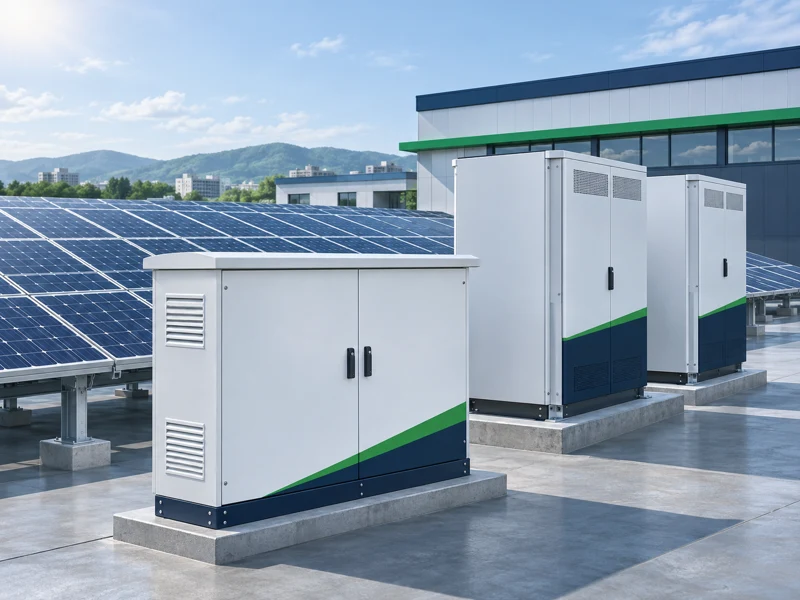
Your DC protection may be positioned around combiner boxes and inverter inputs as part of a coordinated system. Review the actual cable routes, equipment boundaries and earthing network before deciding locations. A neat cabinet alone does not demonstrate effective surge protection.
The protective element responds to a surge and limits voltage across its protection paths. Compare the declared voltage protection level under the specified test conditions.
Bonding and connecting conductors influence the voltage seen by your equipment. Follow the model instructions and installation design rather than relying on the SPD label alone.
Check the model's disconnection and indication functions. Plan an inspection method so a failed or disconnected protection module does not remain unnoticed in service.
Use this sequence to turn your project information into a defensible product specification. Have the responsible electrical designer confirm the final choice against local requirements.
A large discharge-current number does not by itself make an SPD suitable for your circuit. Compare the same parameter, waveform and protection mode across candidate devices.
Maximum continuous operating voltage. Use the parameter relevant to your application and verify that it accommodates your actual maximum circuit voltage.
Voltage protection level under declared test conditions. Coordinate it with equipment impulse withstand and the additional voltage associated with installation leads.
Nominal and maximum discharge-current ratings commonly stated with an 8/20 μs waveform. They describe different test duties and must not be treated as equivalent.
Impulse discharge-current rating associated with the 10/350 μs waveform for Type 1 duty. Compare the declared protection mode and current allocation.
Check the applicable DC or PV short-circuit rating and any conditions attached to it, including the specified external protection.
Check mounting, conductor sizes, tightening torque, temperature, altitude and enclosure protection. These details can decide whether a candidate fits your panel.
Source: photovoltaic strings. Voltage assessment: maximum PV open-circuit voltage. Device evidence: explicit PV application and ratings. Main check: voltage, fault behavior, protection modes and coordination.
Source: electrochemical storage. Voltage assessment: charging and operating limits. Device evidence: explicit compatibility with that battery circuit. Main check: available fault current and safe disconnection conditions.
Source: converter or power supply. Voltage assessment: normal limits and relevant abnormal conditions. Device evidence: DC application suitability. Main check: supply grounding, output characteristics and equipment withstand.
Keep the protective roles clear in your panel specification. An SPD addresses transient overvoltage; a suitable fuse or circuit breaker addresses overcurrent within its declared capability; a DC-rated isolator provides the intended isolation function. Select and coordinate each device for the circuit rather than assuming that one device covers all three duties.
Verify whether the SPD requires external backup protection and which device types or ratings the manufacturer permits. A claim that a particular model operates without an additional fuse applies only within its documented conditions. It cannot be transferred to an unrelated SPD or a higher prospective fault current.
Consider rooftop exposure, inverter locations, cable routes between roof and plant room, and the building's lightning protection concept. Coordinate DC, AC and communication protection where the design requires it.
Review long cable runs, combiner locations, inverter stations and bonding across the site. Equipment spacing and protection boundaries matter alongside the individual device ratings.
Record the source type and grounding arrangement before reviewing terminal layout or enclosure space. For storage or telecom applications, obtain explicit confirmation of compatibility with the actual supply.
Provide the installer with the exact device manual and the approved panel drawings. Confirm protection modes, polarity, conductor routing, bonding points and backup protection before work starts. Keep connection arrangements within the manufacturer's requirements; generic online wiring diagrams may describe a different system.
Installation and servicing require qualified personnel and appropriate isolation procedures. PV conductors can remain energized in daylight even after other equipment is switched off. Treat these notes as selection considerations; they do not replace an installation method, risk assessment or local electrical rules.
Place the status indication where your maintenance team can inspect it and include SPD condition in the site's maintenance plan. If a signaling option is specified, verify how the contact is integrated and how alerts reach the responsible person. A remote contact is useful only when the monitoring process acts on it.
After a reported fault or relevant surge event, follow the manufacturer's inspection and replacement instructions. Record the installed model and replacement module code in your asset list. Do not mix modules between bases merely because they fit physically.
Your technical submittal should identify the complete order code, ratings, protection modes, installation instructions and applicable test evidence. Where a certificate is required, check the issuer, model scope and destination-market acceptance. A standards reference on a product page is not itself third-party certification.
IEC 61643-31:2018 addresses SPDs for the DC side of photovoltaic installations; its published scope excludes PV systems with energy storage such as batteries. Confirm the applicable standard and edition for your project rather than extending PV compliance to every DC circuit.
To compare offers efficiently, send your application, maximum circuit voltage, grounding arrangement, prospective fault current, required SPD type and installation location. Add the destination market, applicable project specification, monitoring needs, quantity and delivery destination. Attach the relevant single-line diagram when it is available.
Ask each supplier to state the proposed exact model and supporting documents against those inputs. If you need labeling or packaging changes, identify them separately from electrical changes. Approve a representative sample and its documentation before you lock a repeat-order specification.
Discuss a DC protection specification ↗Use these original technical references to understand application boundaries and prepare questions for your designer. Their inclusion is educational and does not certify any product offered on this page.
IEC photovoltaic SPD scope ↗ PV protection planning reference ↗Practical answers for specifying, purchasing and maintaining DC surge protective devices.
Can I use an AC SPD on a DC circuit? +
Use a device explicitly rated and approved by its manufacturer for the actual DC application. AC markings alone do not establish DC fault behavior or safe disconnection.
Is a PV SPD suitable for a battery bank? +
Do not assume so. Battery circuits can have different prospective fault currents and disconnection requirements. Obtain explicit application confirmation and supporting ratings for the proposed model.
Should I choose Type 2 or Type 1+2? +
The choice follows the lightning protection concept, installation location and applicable requirements. Have the designer assess lightning-current duty rather than choosing solely by price or enclosure size.
Which voltage should I specify for PV? +
Provide the maximum open-circuit voltage under expected site conditions, including temperature effects. The selected Ucpv must be suitable for that maximum, following the design rules and device instructions.
Are In and Imax the same? +
No. They refer to different discharge-current test duties. Compare like-for-like values, waveform and protection mode when reviewing competing datasheets.
Does a higher kA rating always mean better protection? +
No. You must also match operating voltage, protection level, application, fault capability and installation conditions. A high discharge rating cannot compensate for an unsuitable circuit application.
Does an SPD replace a fuse or breaker? +
No. Surge protection and overcurrent interruption have different roles. Check the required backup protection for the exact SPD and coordinate it with the circuit.
Do I always need an additional backup fuse? +
Follow the model documentation. Some devices allow particular arrangements without additional backup protection, but only within their specified source and fault-current conditions.
Can I install one SPD anywhere in the system? +
Protection locations depend on equipment boundaries, cable routes, exposure and coordination. A single device may not provide the intended protection across widely separated equipment.
Does DC protection also protect the AC side? +
Do not assume it does. Review DC power, AC power and signal interfaces separately within the overall protection concept.
What does the status indicator tell me? +
Its meaning is model-specific. Read the manufacturer's instructions for normal and fault states and the required maintenance action. Indication does not prove that all connected equipment is protected.
Can I replace a module with a similar one? +
Use the replacement approved for the exact base and rating. Visual similarity does not confirm the protective circuit, coding or disconnection compatibility.
Does a standards reference mean certification? +
No. A standards claim and a third-party certificate are different forms of evidence. Check the exact model, issuer, report scope and acceptance requirements.
What should I send for model selection? +
Send the source type, maximum voltage, grounding, fault current, installation location, required protection type and market. A diagram and equipment withstand information improve the review.
Are the illustrations real installations? +
Bring your application requirements together before choosing a part number. Share the circuit information and project documentation so the proposed device can be checked against your source, equipment and installation conditions. Keep your approved model, manuals and evidence together for purchasing and maintenance.
Discuss DC surge protection ↗