
ENCLOSURES & CONNECTIONS
Protect your cable connections. Plan a cleaner installation. Compare plastic junction box configurations by material, lid style, cable entry and usable internal space—then confirm the exact specification for your project.
Discuss your requirements →For panel builders, electrical contractors and OEM sourcing teams.
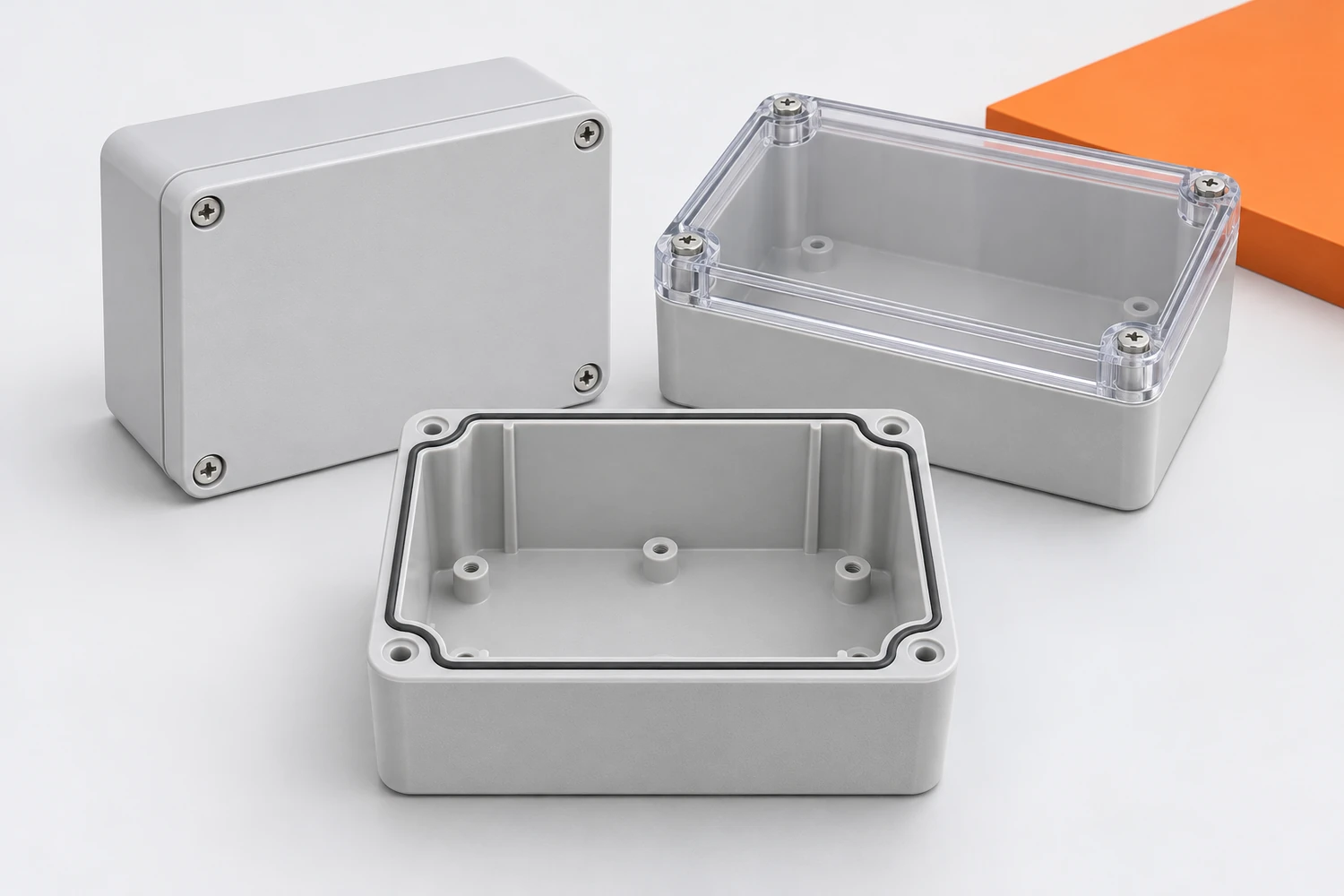
DESIGN WITH PURPOSE
Create a defined space for cable joints, terminals and inspection access. Choose internal dimensions around the complete assembly, including conductor bending space.
Compare the documented resin grade, temperature limits and environmental suitability. A material name alone does not establish an outdoor or flame rating.
Match cover access and mounting to the way your team installs and maintains equipment. Keep lid screws, gland nuts and cable routes accessible.
COMPARE CONFIGURATIONS
Use these selection categories to define your enquiry. Request model availability, drawings and ratings before ordering.
A solid cover keeps connections out of sight. Consider it where visual inspection through the cover is unnecessary, and leave enough room to remove the lid safely.
Inspect suitable internal indicators without opening the enclosure. Confirm the lid material, visibility, impact performance and environmental rating for the exact assembly.
Plan cable-entry positions around your equipment layout. Check machinable zones and minimum edge spacing before specifying drilled holes or cutouts.
Predefined entry positions can simplify compatible conduit or gland layouts. Verify knockout dimensions and sealing accessories instead of assuming a universal fit.
Consider compact formats when connection count and mounting area are limited. Check terminals, cable bend radius and enclosure depth together before choosing the footprint.
Consider a compatible plate or internal mounting arrangement for terminals and small devices. Confirm accessory compatibility and usable clearances from the drawing.
MATERIAL CHOICES
Evaluate ABS for applications supported by the specific product data. Review heat, impact, chemical exposure and flame performance. Do not assume a general-purpose grade is UV-stabilized.
Consider polycarbonate where the documented grade meets your impact, visibility or outdoor requirements. Confirm UV suitability and temperature limits for both the base and cover.
The resin is only one part of the specification. Seals, cover fasteners, mounting details, glands and modifications also affect the finished installation.
YOUR SELECTION CHECKLIST
Record indoor or outdoor location, dust, water exposure, sunlight, chemicals and ambient temperature. Identify applicable project and local installation requirements.
List terminals, devices and conductors. Check usable internal width, height and depth, leaving space for wiring, hardware and maintenance.
Document cable diameters, entry quantity, threads or conduit system and routing direction. Coordinate glands, seals and unused-entry plugs.
Confirm wall space, mounting centers, brackets and cover-removal clearance. Check whether fixing holes are inside or outside the sealed compartment.
Request documentation for the exact model and assembled configuration. Confirm ingress, impact, temperature and flame requirements separately.
Agree drawings, accessories, quantity and destination. For modified boxes, approve entry positions and a representative sample before volume production.
APPLICATIONS
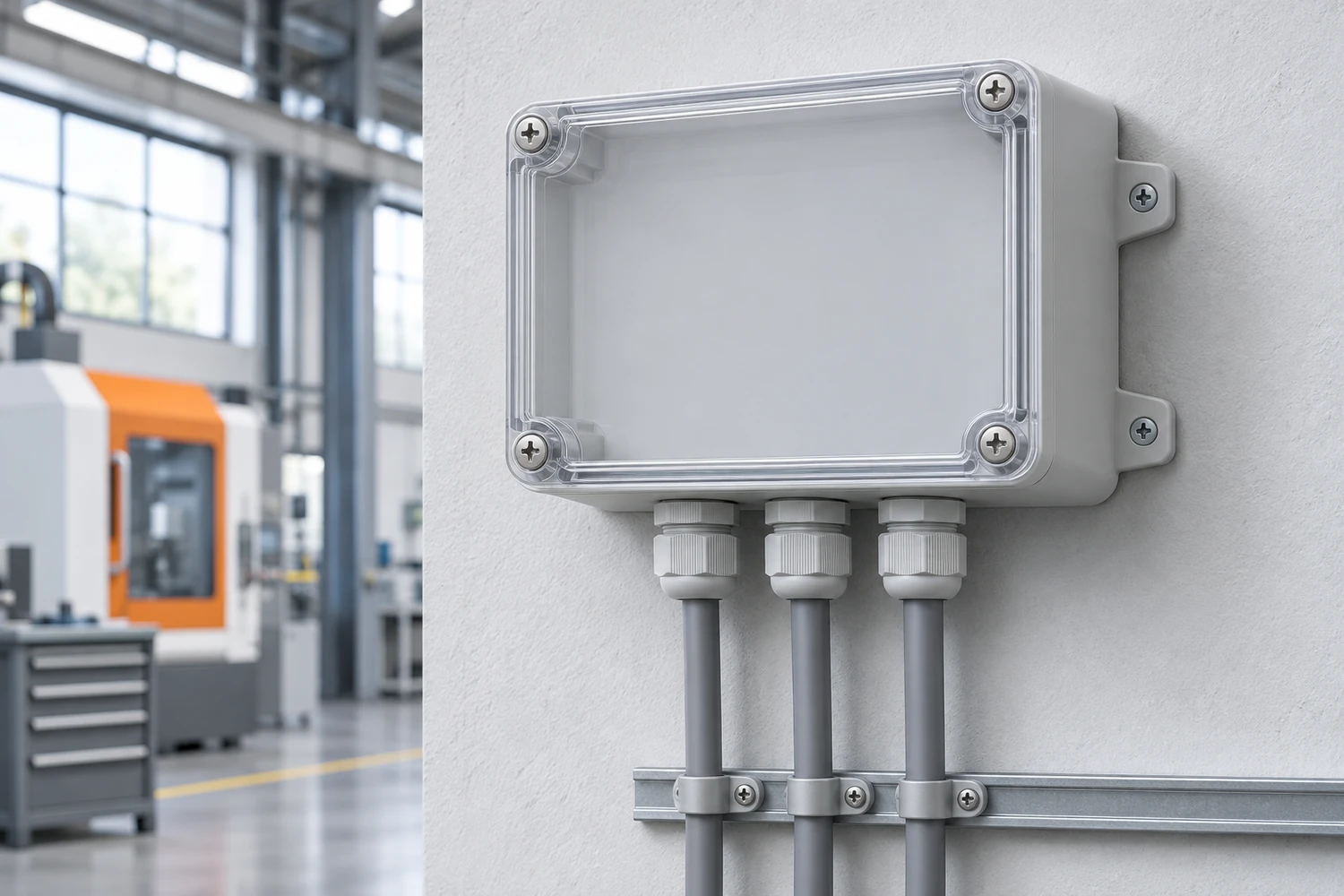
Use your junction box as part of a planned electrical installation. A box suitable for a clean equipment room may need a different specification for sunlight, washdown or outdoor exposure. Select the enclosure, accessories and mounting arrangement together.
Review your application →PROJECT CONTEXT
Plan local connection points for compatible sensors, actuators and auxiliary circuits. Consider vibration, oils, cleaning agents and access around nearby machinery.
Organize suitable lighting and service connections in accessible locations. Follow local requirements for enclosure use, cable support, circuit separation and maintenance.
Evaluate sunlight, rain, temperature cycling and condensation. Specify a documented outdoor-suitable enclosure and compatible sealed entries rather than relying on appearance.
PROCUREMENT READY
External size • usable internal space • mounting centers • lid clearance • fastener type • compatible plate or rail accessories.
Exact ingress rating • documented temperature range • UV suitability • impact requirements • relevant chemical compatibility.
Model-specific datasheet • dimension drawing • applicable test documents • modification drawing • accessories • agreed packing and delivery details.
Ratings belong to defined products and test conditions. Drilling, added components or unsuitable accessories can affect performance. Installation should be completed by qualified personnel to applicable local requirements.
Request model documentation →ANSWERS FOR BUYERS
What is a plastic junction box used for?
It houses electrical connections or compatible small components in a defined enclosure. Select it for the circuit, mounting arrangement and environment, following model instructions and local rules.
Are all plastic junction boxes waterproof?
No. Water protection depends on the exact rating, correctly fitted cover and compatible cable entries. Confirm the documented rating and installation conditions for the complete assembly.
Can I install one outdoors?
Only when the specific enclosure and accessories suit the exposure. Check documented UV suitability, temperature limits, water protection and condensation requirements.
Should I choose ABS or polycarbonate?
Compare the actual resin grade and finished-product data. Impact, UV behavior, temperature and flame performance vary; the material name alone does not prove suitability.
How do I choose the size?
Use internal dimensions and an assembly drawing. Include terminal sizes, component height, cable bending space, gland projections and safe access.
Can the enclosure be drilled?
Confirm permitted machining locations with the supplier. Agree cutout drawings, wall clearances, sealing and accessories, and assess the effect on required protection.
Does a plastic box remove earthing requirements?
No. Conductive components, internal devices and the installation may still require protective bonding or earthing. Have a qualified designer determine the complete system requirements.
What should I send for an enquiry?
Send application, destination, dimensions or drawings, cable entries, material and lid preference, required ratings, accessories and quantity. Include mandatory documentation requirements early.
NEXT STEP
Share your installation environment, required internal space, cable-entry layout and order quantity. Include the destination market and mandatory documentation so the proposed model can be checked against your project.
Send your junction box enquiry →