
ENERGY MONITORING / ELECTRICAL METERING
Choose energy meters around your electrical system, measurement purpose and data needs. Compare single-phase and three-phase configurations, direct-connected and current-transformer inputs, and local or networked readings for your next building or panel project.
Discuss your metering requirements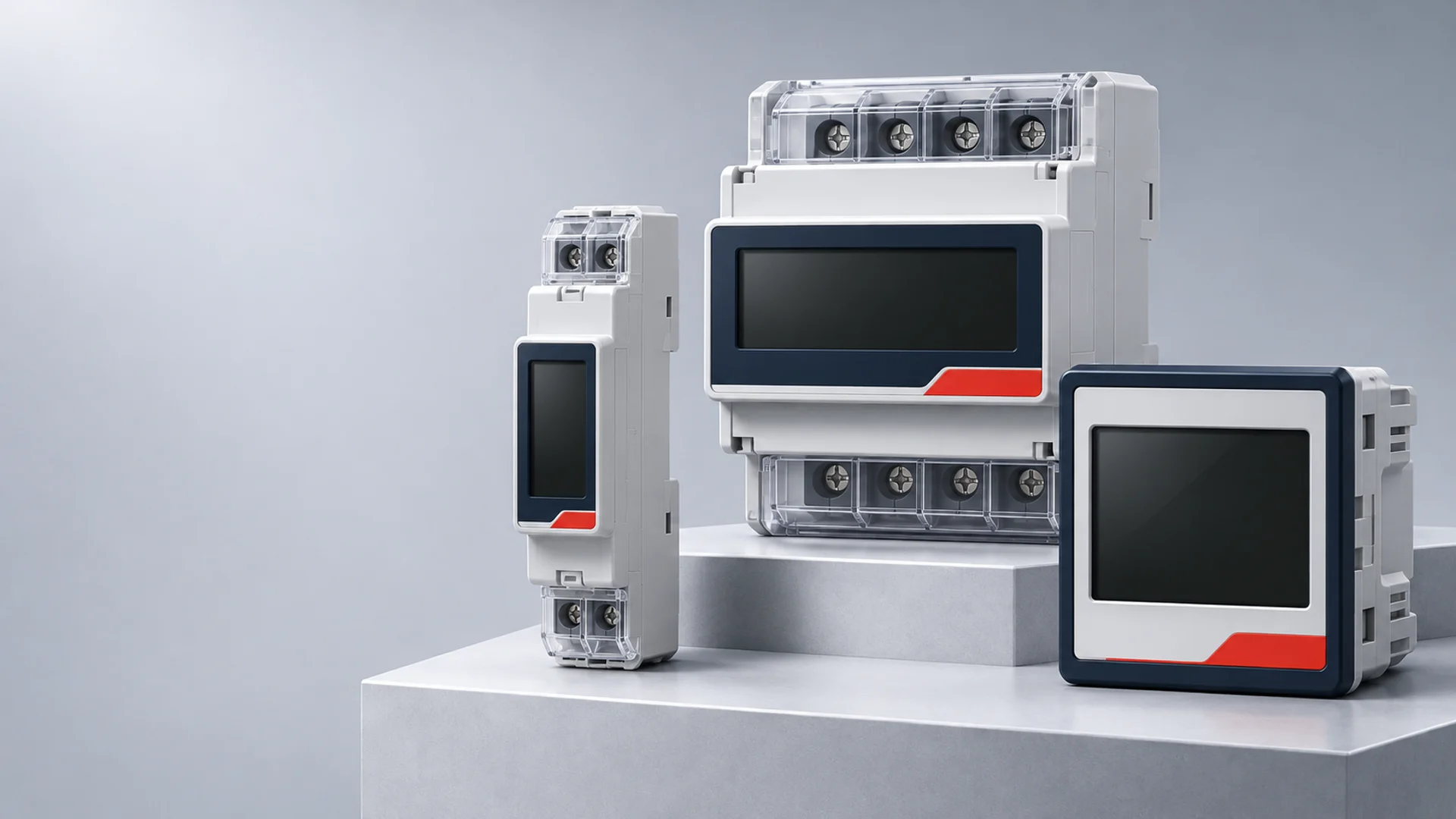
See how individual areas contribute to your site total. Define each metering boundary before selecting hardware, so your reports answer the operational questions you actually have.
Match your meter to the supply configuration, panel space and current measurement method. Confirm terminal access, auxiliary power and communication requirements before finalizing your layout.
Plan the full data path from meter to reporting software. Interface type, register mapping and commissioning access matter as much as the front-panel display.
An energy meter measures electrical energy consumed or exchanged over time, commonly displayed in kilowatt-hours (kWh). Depending on the model, you may also read voltage, current, active power, power factor or other electrical quantities. Check the actual measurement list rather than assuming every digital meter offers the same functions.
Use energy data to compare operating periods, allocate internal costs and identify loads worth investigating. A meter records consumption; it does not automatically reduce it. Metering also does not replace circuit protection. Protective devices and the installation design must be specified separately.
These are selection categories, not a claim that every configuration is available in the current catalog. Ask for the exact model datasheet before specifying a device.
For compatible single-phase circuits in small premises and branch applications. Confirm the wiring arrangement, supply voltage and direct current rating against your installation.
For suitable three-phase distribution and equipment circuits. Verify whether the device supports your three-wire or four-wire system and which quantities it measures.
Load current passes through the meter terminals. Select within the stated current range and confirm conductor capacity, terminal requirements and installation conditions.
External current transformers provide the measurement signal. Match the meter input to the CT secondary type and configure the correct ratio during commissioning.
For mounting within compatible distribution enclosures. Check module width, usable depth, access to the display and space for safe cable routing.
For a front-facing display on a switchboard or enclosure door. Confirm the cutout dimensions, rear clearance and any separate auxiliary supply requirements.
Typical decision: use when the circuit and load current fit the meter rating. You must verify maximum current, conductor size and terminal conditions. Installation changes may require interrupting the measured power path. The exact datasheet determines suitability.
Typical decision: use when your design requires external sensing. You must verify CT ratio, output type, burden and compatibility. Overall measurement performance depends on the meter, CTs, installation and configuration together.
This is a separate choice from direct or CT measurement. Ask whether your system needs pulse output, RS485/Modbus or another supported interface, then verify the actual variant and integration documentation.
Use cumulative kWh readings to track consumption between dates. Keep reading timestamps consistent and check rollover, reset and data-retention behavior before building long-term reports.
Instantaneous power and any supported demand measurements can reveal when loads are active. Verify the available quantities and averaging intervals for your chosen device.
If your site has generation or storage, define which energy direction you need to record. Confirm separate import/export registers and the supported installation configuration instead of assuming bidirectional operation.
Decide whether your readings support maintenance, internal allocation, monitoring or regulated billing. A device suitable for an operational dashboard is not automatically suitable for legally controlled billing.
Record phase count, wiring configuration, nominal voltage and frequency. Identify whether neutral is present and check the manufacturer wiring options for that exact model.
Record the circuit current and choose direct or transformer measurement. For a CT design, identify the required secondary input and ensure the selected CTs and meter are compatible.
Check mounting method, usable depth, cutout or module space, ambient conditions and access for maintenance. Allow space for the complete installation rather than the meter body alone.
Specify the interface, software platform and required readings. Confirm register documentation, addressing, communication settings and any gateway needed between field devices and your network.
Review the datasheet, installation manual and relevant conformity documents for the exact order code. Agree on an acceptance check before you commit to a larger project.
Place measurement points where they support a clear decision. A site-level meter can show the overall trend; additional submeters help you separate areas or major loads. Avoid collecting overlapping totals without a documented reporting hierarchy.
Separate floors, common services and selected equipment where the electrical layout allows it. Internal allocation and tenant billing have different documentation and legal requirements.
Track selected feeders, production areas or equipment groups to support investigation of operating patterns. Match the sensing method and environment to the actual switchboard and load.
Understand energy exchange at a defined connection point when the chosen device supports the required directions. Verify compatibility with any inverter, controller or energy-management platform.
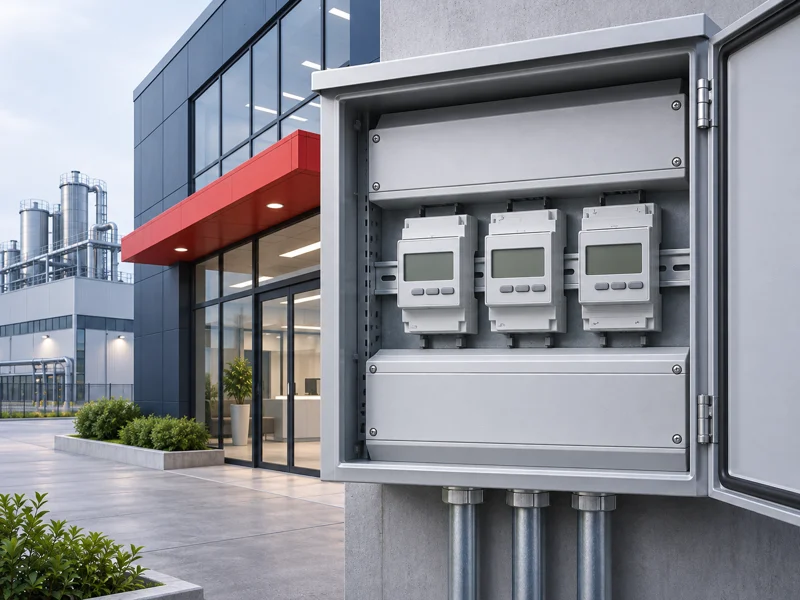
For a communicating meter, a physical port is only the start. Your controller must understand the meter protocol and data map. Check the device address, serial parameters, register addresses, scaling, units and data format. Confirm that the selected software can read the quantities you need before approving the integration.
Where supported, pulse output can provide a simple consumption signal to a compatible counter. It does not provide the same range of information as a digital register map. Specify the pulse constant, electrical output characteristics and receiving equipment together. For remote reporting, define how your gateway stores and forwards readings if communication is interrupted.
Review your project requirementsHave qualified personnel follow the exact installation manual and applicable local requirements. Confirm isolation procedures, terminal requirements and protection arrangements for the installation. A CT installation needs particular attention to polarity, phase association, ratio configuration and safe handling of the secondary circuit.
After installation, compare plausible load readings, verify the energy direction and record initial register values. For networked systems, check that the displayed and remotely collected quantities agree in units and scaling. Keep a commissioning record with the meter identity, CT information, configuration and measurement boundary so later reports can be interpreted correctly.
Request the complete model code, supported wiring systems, voltage and current inputs, accuracy specification, dimensions and installation conditions. Check all accessories required to make the proposed device work in your panel.
Request documents that match the exact model and intended market. General statements about a product family do not establish legal billing suitability. Confirm local metrology requirements where readings determine charges.
Request the communication manual, register map and instructions for configuration, reset access and data retention. Agree which documents and configuration records will accompany the shipment.
Use manufacturer manuals to understand the questions to ask. The following external references illustrate metering and integration principles; they do not establish the specifications of products offered on this site.
Meter installation and configuration reference ↗ RS485 and Modbus reference ↗What is the difference between kW and kWh? +
kW describes active power at a point in time. kWh describes energy accumulated over a period. For consumption comparisons, record energy together with the dates and the measurement boundary.
Should I choose a single-phase or three-phase meter? +
Match the meter to the actual supply and supported wiring arrangement. A three-phase label alone does not confirm compatibility with every three-wire or four-wire installation.
When should I use a CT-operated meter? +
Use a CT-based design when it fits the measurement architecture and current requirements. Verify the meter input, CT output, ratio and installation conditions together rather than choosing on load current alone.
Are all DIN rail meters direct-connected? +
No. Mounting format and sensing method are separate characteristics. A DIN rail device may use direct or external current measurement depending on its design.
Does every digital meter support Modbus? +
No. Communication is model-specific. Check the exact order code, physical interface, supported protocol and register documentation before selecting a meter for a network.
Can I connect RS485 directly to Ethernet? +
The interfaces are different. A suitable gateway may be required, and it must support the relevant protocols and data handling. Verify the complete integration path with your system supplier.
Can the meter measure exported energy? +
Only when the selected model and configuration support the required direction. Confirm separate registers and how the device treats reverse flow before using it in generation or storage applications.
Can this type of meter be used for tenant billing? +
Billing suitability depends on the exact device, approvals and local metrology rules. Establish those requirements before purchase; general monitoring capability is not sufficient evidence.
Does the meter protect a circuit from overload? +
Metering and circuit protection serve different purposes. The installation still needs appropriately selected protective devices. Do not treat a measurement function or alarm as automatic protective interruption.
Which accuracy should I specify? +
Choose around the intended measurement purpose and applicable requirements. For CT installations, consider the complete measurement chain. Request the accuracy conditions and scope from the supplier.
What information is needed for a quotation? +
Send the application, supply configuration, voltage, expected current, direct or CT preference, mounting space, required interface, destination market and quantity. Include billing requirements where relevant.
Can I reset accumulated energy readings? +
Reset capability and access controls vary by model. Check which registers can be reset, who can change them and how readings are retained after loss of power.
How do I compare readings from different meters? +
Use consistent units, time intervals and measurement boundaries. Check CT scaling and direction, and account for downstream circuits so totals are not accidentally counted more than once.
What should be checked during commissioning? +
Verify the wiring against the manual, plausible load values, phase association, configured CT ratio and energy direction. Confirm remote readings use the same units and scaling as local values.
Are the pictured devices exact products? +
Request actual model photographs, datasheets and dimensions before final product approval.
Share your system configuration and the decision you need your energy data to support. Include the application, current measurement method, mounting constraints, communication requirements, quantity and destination market. Request confirmation of the exact model, documentation and project suitability before placing your order.
Contact the team about Energy Meters