
SOLAR PV PROTECTION / PRODUCT CATEGORY
Bring your PV strings together with a configuration matched to your inverter, protection strategy and installation environment. Compare enclosure layouts, define your DC circuit requirements and prepare a clear project specification.
Discuss your configuration Request selection support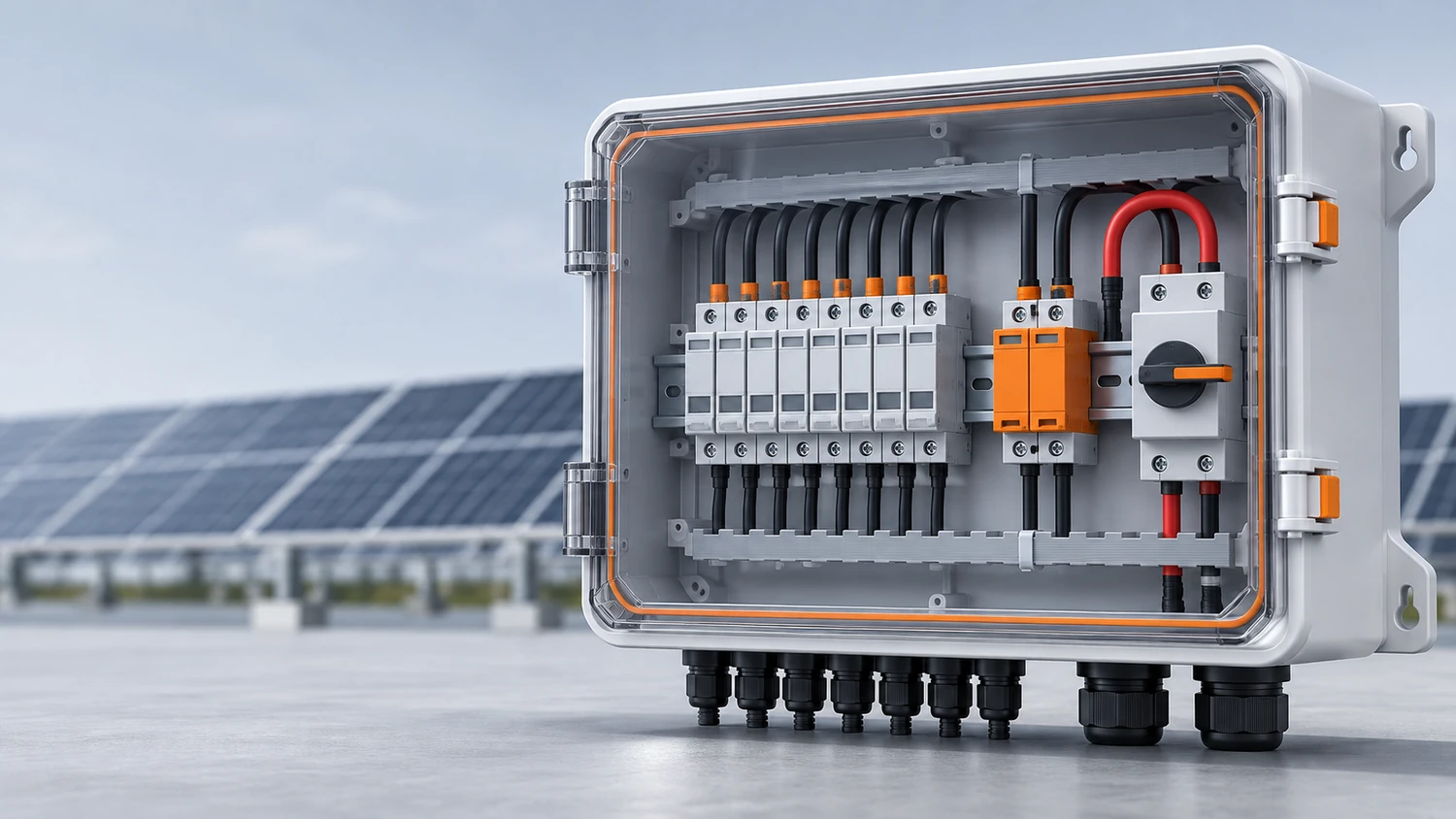
Final construction and ratings depend on the selected model.
A PV combiner box brings compatible string circuits into a planned DC collection point before the inverter. Depending on the design, it can accommodate string overcurrent protection, surge protection, isolation and monitoring. Your string arrangement and inverter MPPT architecture determine what should be combined and what must remain separate.
Group compatible parallel strings while keeping independent MPPT inputs separated as required by the inverter design.
Coordinate PV-rated fuses or protective devices, surge protection and conductors for the actual circuit conditions.
Provide an accessible enclosure, clear circuit identification and a documented isolation procedure for qualified personnel.
Start with the circuit layout your project needs. These are configuration categories, not confirmed stock models. Request a matching bill of materials and datasheet before ordering.
For smaller arrays where enclosure space and straightforward cable routing matter. Confirm string count, output circuits and MPPT separation.
For parallel string collection. Define current contribution, fuse coordination, output conductor capacity and the inverter input limit.
For projects that require string-level visibility. Specify measurement channels, communications, auxiliary power and the signals your monitoring system accepts.
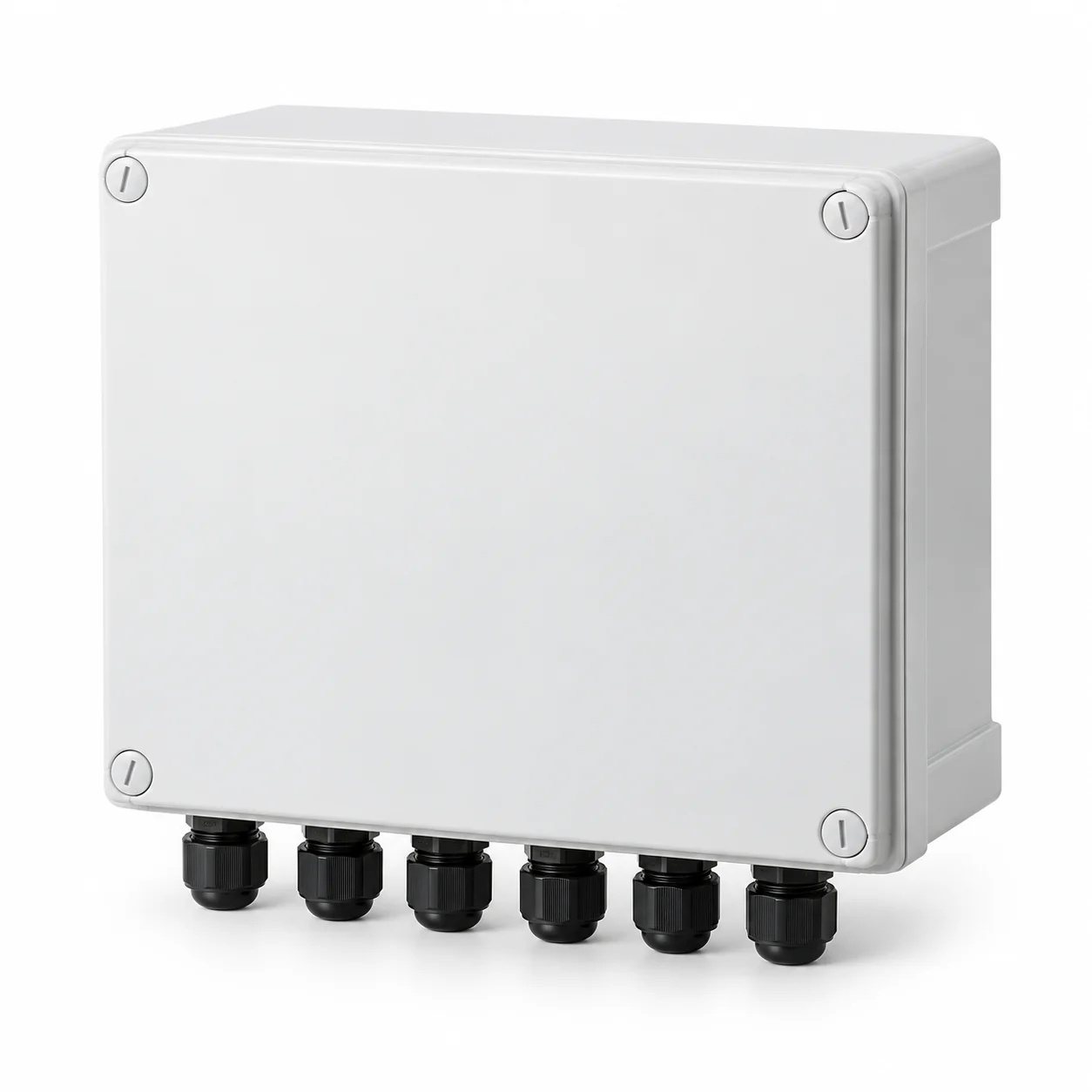
Conceptual enclosure-family illustration; cabinet size and internal equipment are project dependent.
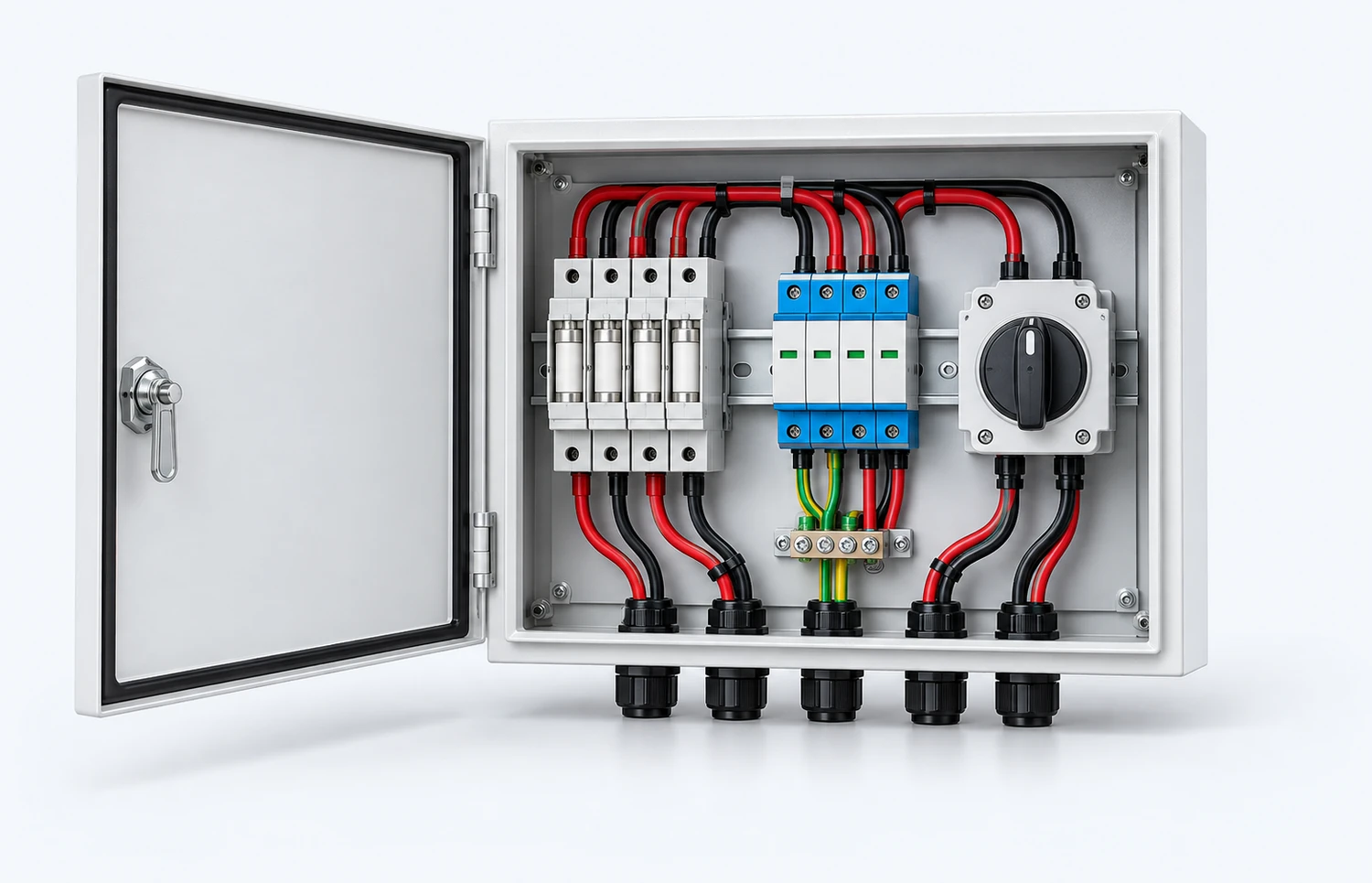
Conceptual arrangement only — not an installation or wiring diagram.
Determine whether string protection is required from the array configuration, module reverse-current limits and applicable rules. Select PV-rated devices with coordinated voltage, current and breaking capability.
Select an SPD for the PV earthing arrangement and maximum DC conditions. Coordinate its type, operating voltage, backup protection and installation location with the lightning protection design.
Verify switch-disconnector DC utilization, pole arrangement and load-breaking capability for the actual circuit. A fuse holder alone is not a substitute for an appropriate load-break switch.
Calculate the maximum string open-circuit voltage at the lowest design temperature. Check every component and the complete assembly against that value.
Provide module Isc, parallel string count and expected operating conditions. Account for applicable design factors and temperature derating.
Share the inverter input diagram. Combining circuits must respect independent trackers, input current limits and permitted parallel connections.
Specify outdoor exposure, ambient temperatures, altitude, UV, condensation and corrosion. Verify enclosure rating after cable entries are installed.
Define cable cross-sections, conductor material, entry direction and connector type. Confirm compatible terminations and installation torque.
Request the exact-model datasheet, circuit diagram, bill of materials, installation instructions and applicable test or compliance evidence.
Review whether an external combiner is required by the inverter arrangement. Prioritize safe access, suitable outdoor mounting and neat cable routing.
Coordinate multiple roof zones, inverter locations, maintenance access and the site surge protection strategy.
Consider distributed collection points, environmental exposure and maintenance requirements. Add monitoring only when the project calls for it.
Send your single-line diagram and the information below so a proposed configuration can be checked against your array and inverter. The enclosure appearance alone does not establish an electrical rating.
Module datasheet, modules per string, strings per input, minimum site temperature and expected circuit currents.
Inverter model, number of MPPTs, maximum DC voltage, current limits and proposed output circuits.
Installation country, enclosure environment, monitoring requirements, quantity and required documentation.
What does a PV combiner box do? +
It collects compatible PV string circuits at a planned DC point. The assembly may also contain overcurrent protection, surge protection, isolation and monitoring, depending on the design.
Does every PV installation need an external combiner? +
No. The need depends on the inverter input arrangement, the number of parallel strings and the protection already provided. Confirm the complete design before adding an external assembly.
How many strings can be connected? +
Use the approved circuit diagram and assembly rating. Available terminals or spare enclosure space do not establish the permitted string count.
Can I combine strings from different MPPT inputs? +
Independent MPPT inputs should remain separate unless the inverter manufacturer explicitly permits the proposed arrangement. Share the inverter input diagram when requesting a configuration.
Can an AC circuit breaker be used on the PV DC side? +
Use a device explicitly rated for the actual DC voltage, current, fault conditions and pole arrangement. An AC rating alone does not establish suitability for a PV DC circuit.
How do I select the enclosure IP rating? +
Match the complete installed enclosure to the site exposure. Cable glands, seals, ventilation and mounting affect the finished protection level; check the assembly documentation.
Are the illustrations exact product drawings? +
Confirm dimensions, component layout, ratings and connection details using the supplied model documentation.
What should I verify before ordering? +
Check the circuit diagram, voltage and current ratings, protection coordination, enclosure conditions, terminals, monitoring interface and applicable compliance evidence for the exact proposed assembly.
Tell us your string layout, inverter model and installation conditions. Request a proposed configuration, supporting documents and a quotation based on your project requirements.
Send your project requirements