
LOW-VOLTAGE POWER DISTRIBUTION
Plan an organised point of power distribution for your building. Compare enclosure formats, circuit arrangements and protection requirements before you specify a board for residential, commercial or light industrial use. Start with your load schedule and installation conditions, then confirm the exact assembly and documentation with your supplier.
Discuss your specification ↗Single-phase or three-phase • Surface or flush mounting • Project-led selection
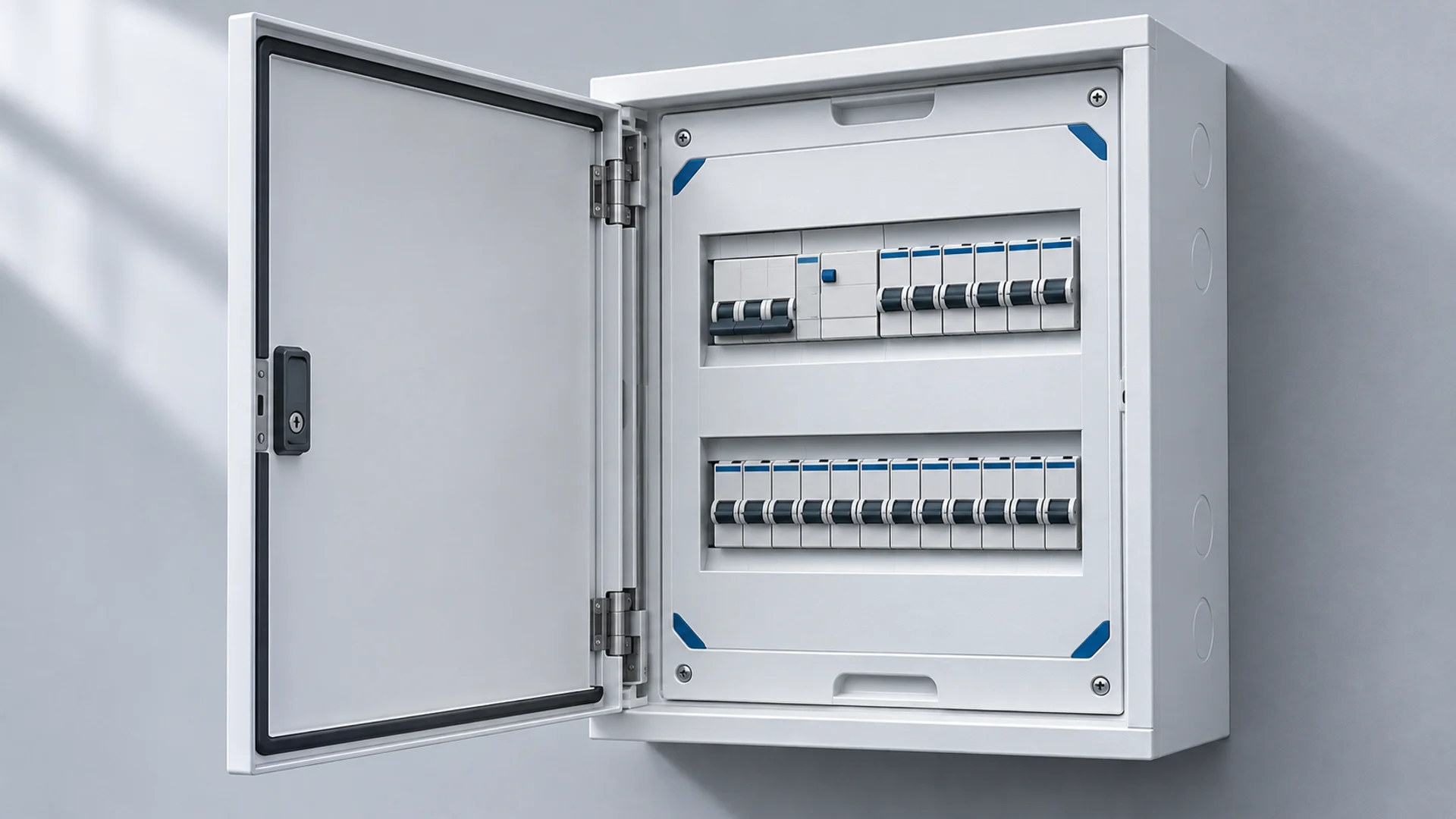
Final construction and device layout depend on the selected assembly.
01 / DISTRIBUTION BOARDS
Turn your circuit schedule into an assembly brief. Define the incomer, outgoing protection, neutral and protective-earth arrangement, cable access and future expansion before selecting an enclosure.
Match the distribution board to the site. Your installation method, available wall space, environment and access requirements help narrow down the appropriate configuration.
Compare equivalent scopes. A bare enclosure, a populated board and a fully verified assembly are different deliverables; define what your quotation must include.
02 / DISTRIBUTION BOARDS
These are configuration families, not a claim of available stock or certified model ranges.
A format for suitable single-phase circuits in homes and smaller premises. Confirm supply characteristics, main isolation and the protection required for every outgoing circuit.
A configuration for installations supplied across three phases. Confirm the phase and neutral arrangement, outgoing loads and the engineer’s phase allocation before finalising the board.
A practical choice when the enclosure is fixed onto a finished wall. Coordinate projection, fixings, conduit entries and service access with the installation.
An option where the enclosure is recessed into the wall. Check recess depth, structural constraints, trim details and access before construction work begins.
Consider when mechanical demands and the applicable local rules favour metal construction. Specify corrosion exposure, protective bonding and the complete enclosure finish.
Consider where a suitable non-metallic enclosure meets project requirements. Verify material suitability, environmental exposure and the complete assembly’s declared characteristics.
03 / DISTRIBUTION BOARDS
State whether your scope covers the box, door, mounting rails, neutral terminals, protective-earth terminals and blanking pieces. Device fit alone does not establish assembly suitability.
Define each protective device and accessory by an agreed schedule. Ask who is responsible for assembly design, verification, final checks and the supplied documentation.
For a non-standard layout, review drawings before production. Agree cable entry, mounting, identification, spare capacity and the procedure for approving any substitution.
04 / DISTRIBUTION BOARDS
Your board brings incoming power and outgoing circuits into one organised assembly. The enclosure supports protection against contact with hazardous parts under the intended conditions, while the selected devices provide their specified protective functions. The enclosure itself does not replace circuit protection. Successful selection depends on the whole arrangement: devices, conductors, terminals, busbars, covers and installation conditions.
05 / DISTRIBUTION BOARDS
Treat these as specification headings. The approved assembly drawing determines the final construction.
Describe main isolation, supply connection and the proposed incoming device. Confirm terminal capacity and the relationship to upstream protection.
List circuit purpose, poles, protective function and the selected device references. Include the residual-current and surge-protection requirements where applicable.
Identify neutral and protective-earth connections, cable space, entry positions and the means of keeping unused openings appropriately closed.
06 / DISTRIBUTION BOARDS
Mounting: onto the wall surface.
Space: projects into the room.
Planning: coordinate external conduit routes.
Review: fixings, impact exposure and access.
Good starting point: accessible service areas and suitable retrofit work.
Mounting: recessed into the wall.
Space: requires sufficient recess depth.
Planning: coordinate during building works.
Review: wall construction and entry routes.
Good starting point: projects where a recessed finish is specified.
Confirm the installed enclosure protection, clearances, door opening and cable-bending space. The mounting format does not determine current rating, short-circuit performance or compliance by itself.
07 / DISTRIBUTION BOARDS
Begin with the electrical design, then narrow down the enclosure and layout. A larger module count alone does not make a board suitable for a higher load.
Record system voltage, frequency, number of phases, earthing arrangement and the prospective short-circuit conditions at the board location.
List the loads, outgoing circuits and protective functions. Include device widths and accessories rather than counting circuits as if every circuit used one module.
Review declared assembly ratings, the permitted device combinations, thermal conditions and the manufacturer’s installation requirements before approving the selection.
08 / DISTRIBUTION BOARDS
Leave room for the actual components your design needs. A main switch, residual-current protection, surge protective device, monitoring equipment and terminals can take space beyond the outgoing circuit breakers. Reserve expansion capacity only after checking wiring space and the assembly’s permitted arrangement. Specify spare ways explicitly and confirm suitable blanking pieces. Do not assume that adding more devices later preserves the original thermal performance or verification.
09 / DISTRIBUTION BOARDS
Select circuit protection using the cable and load design. The interrupting capability and assembly short-circuit characteristics must suit the conditions at the installation.
Where required, choose the type and arrangement for the connected loads and local rules. Agree how circuits are grouped and how neutral conductors are arranged.
Where the design requires an SPD, confirm its suitability for the supply system, its coordination requirements and the installation space identified by its manufacturer.
10 / DISTRIBUTION BOARDS
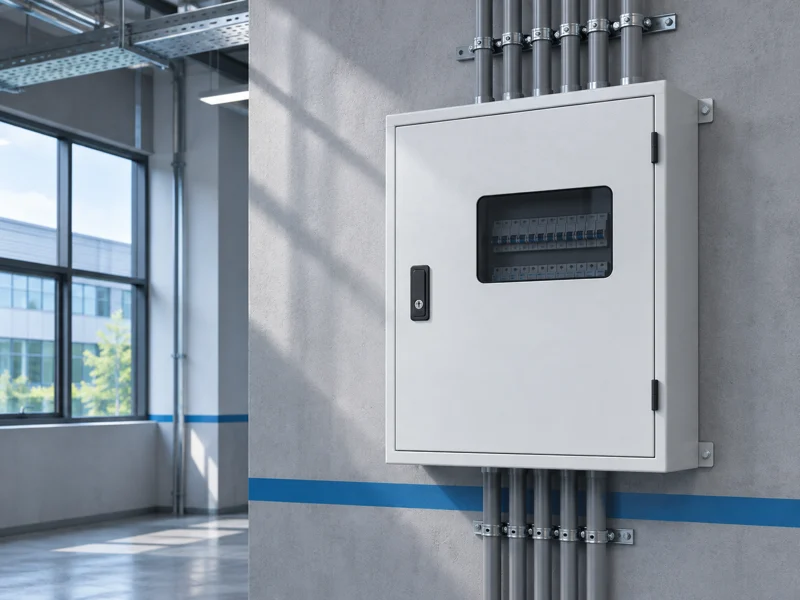
Group the circuits required by your design while accounting for user access and local installation rules. Check the specified enclosure material, residual-current protection and circuit identification.
Coordinate lighting, socket outlets and building-service circuits. Allow maintenance access and identify which circuits require continuity, dedicated protection or a separate distribution arrangement.
Review dust, moisture, temperature and mechanical exposure. Building distribution and machinery control have different duties; specify the correct assembly for the intended use.
11 / DISTRIBUTION BOARDS
Describe whether the board will be indoors, outdoors or in a sheltered service area. Dust, water, corrosion, sunlight and ambient temperature influence the enclosure selection. An IP rating describes specified ingress-protection performance; it does not by itself confirm suitability for every outdoor condition. Cable entries, glands and modifications can affect the installed protection. Ask for the exact enclosure rating and installation instructions for the configuration you intend to use.
12 / DISTRIBUTION BOARDS
IEC 61439-3:2024 addresses distribution boards intended to be operated by ordinary persons within its defined scope. Confirm the applicable assembly standard and local adoption for your project. A component certificate or an empty enclosure specification does not automatically establish compliance of the populated board. Request documentation identifying the supplied configuration and the responsible assembly manufacturer.
Read the IEC standard scope ↗13 / DISTRIBUTION BOARDS
Check overall dimensions, mounting, entries, component positions, circuit identification and the revision that your team has approved.
Request the electrical and environmental ratings applicable to the complete assembly and the conditions or limitations that accompany them.
Request the relevant verification information, routine-check records where applicable, and the installation and maintenance instructions supplied for your order.
14 / DISTRIBUTION BOARDS
If your project needs a special layout, send a marked-up drawing and circuit schedule. State enclosure dimensions, mounting format, door preference, entry locations, identification language and the required supplied scope. Ask the supplier to confirm feasibility, samples, minimum order quantity, lead time and documentation. Agree substitution controls so that a change of protective device, busbar or enclosure is reviewed before the order is produced.
15 / DISTRIBUTION BOARDS
What is a distribution board?
It is an assembly that distributes an incoming electrical supply to outgoing circuits, with the devices and connections specified for those circuits. Select it as a complete assembly for the intended installation.
Is a consumer unit the same thing?
The terminology depends on the market. Consumer unit often refers to a particular form of distribution assembly for domestic and similar use. Confirm the local definition and requirements rather than relying on the name.
How many ways do I need?
Start with a circuit schedule and the widths of all selected devices. Add the incomer, accessories and agreed spare capacity. Verify wiring space and the permitted layout as well as module count.
Can I mix protective-device brands?
Use the combinations permitted for the assembly. Physical fit on a DIN rail does not confirm busbar compatibility, terminal suitability or preservation of the declared assembly performance.
Does an empty enclosure have a current rating for my completed board?
Do not infer completed-assembly performance from the enclosure alone. The devices, conductors, connections, arrangement and service conditions all need to be covered by the assembly specification.
Is a metal enclosure always required?
That depends on the installation location and applicable local rules. Specify the required material and confirm the manufacturer’s intended use and installation conditions.
Does a high IP rating make any board suitable outdoors?
No. Consider ingress protection together with sunlight, corrosion, ambient temperature, condensation and the installed cable-entry arrangement. Obtain confirmation for the intended outdoor exposure.
Can I use an AC board for a DC application?
Do not assume AC ratings or components are suitable for DC. A DC application requires confirmation of the relevant devices, isolation, assembly ratings and applicable standard.
Can spare ways be filled later?
Only after checking the permitted device arrangement, protection requirements, wiring space and thermal limits. Update the circuit identification and documentation when the configuration changes.
Are RCDs or RCBOs included?
Inclusion depends on the agreed schedule. Identify the required protective functions for each circuit and specify the appropriate devices with the electrical designer.
Does every board need an SPD?
The requirement depends on the electrical design and local installation rules. If an SPD is required, specify its selection and coordination requirements within the assembly brief.
What affects price?
Scope, enclosure format, circuit count, protective devices, accessories, documentation and quantities all affect a quotation. Compare offers against the same approved specification.
What should I send for a quotation?
Send the destination market, application, supply characteristics, circuit schedule, installation environment, mounting preference, drawings, quantity and delivery requirements.
Can I request branding or a custom layout?
Describe the requested changes and ask for written confirmation of availability. Agree drawings, samples, documentation and acceptance criteria before placing the order.
Who should install a distribution board?
Installation and commissioning should be carried out by appropriately qualified people under the applicable local requirements and the manufacturer’s instructions. This page is a selection guide, not a wiring procedure.
16 / DISTRIBUTION BOARDS
Supply voltage and frequency; phase arrangement; earthing system; load schedule; prospective fault conditions; incomer and outgoing-device requirements.
Mounting format; available space; indoor or outdoor conditions; enclosure material; cable-entry routes; access and expansion requirements.
Destination market; quantity; required documents; branding needs; delivery location; target schedule; contact details for technical clarification.
17 / DISTRIBUTION BOARDS
Bring your drawings, application details and supply requirements together before requesting a proposal. A clear specification helps your supplier confirm the suitable scope, identify missing information and quote an equivalent configuration. Use our contact page to share your project requirements and arrange the next technical discussion.
Discuss your project ↗Include: destination • quantity • mounting • supply • circuit schedule • required documents