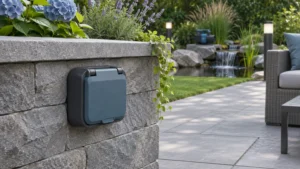
A single-pole waterproof switch opens or closes one electrical path. A double-pole waterproof switch operates two electrically separate paths through one linked action. Choose between them by the conductors your circuit must switch, then check the voltage, load rating and outdoor protection separately.
What does a pole mean in a waterproof switch?
Pole count describes the internal contact arrangement. It does not describe the number of visible rockers, mounting holes or cable entries. Waterproof construction protects the mechanism and enclosure against specified ingress conditions; it does not change the meaning of single-pole or double-pole.
A basic SPST mechanism has one switched path with an open and a closed state. A basic DPST mechanism has two contact paths that change state together. Terminal counts differ when a product includes changeover contacts, indicator connections or auxiliary terminals, so identify the diagram rather than relying on terminal count alone.
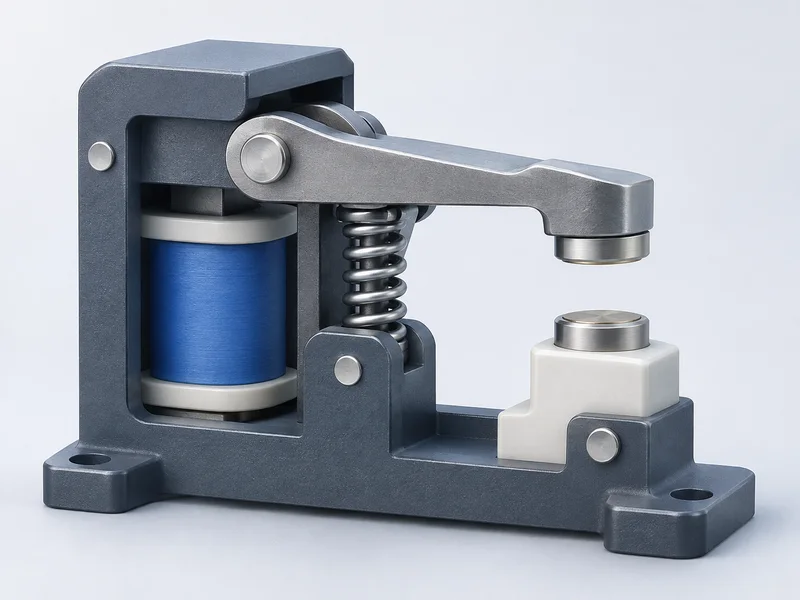
Single-pole and double-pole compared
For a conventional line-and-neutral circuit, a single-pole control commonly interrupts the line conductor. A suitable double-pole device can interrupt line and neutral together where the circuit design calls for that arrangement. Other supply systems may require different conductors to be opened. The installer must identify the actual system.
Do not switch the protective earth conductor as an ordinary control function. Its continuity is a separate safety requirement.
| Question | Single-pole | Double-pole |
|---|---|---|
| How many paths switch? | One | Two, with linked operation |
| Basic on/off arrangement | SPST | DPST |
| Does it imply higher current? | No; use the stated rating | No; use the stated rating |
| Does it provide two independent controls? | Not by pole count alone | No; basic DP operation is linked |
| Does it prove waterproof performance? | No; check the IP and installation conditions | No; check the IP and installation conditions |

When can a single-pole waterproof switch be appropriate?
A single-pole device may suit routine control of an outdoor lighting zone when its contact function, supply rating and load compatibility are correct. One mechanism may operate several luminaires together, provided the combined load is within the manufacturer's limits.
Single-pole does not mean one lamp, and it does not mean low current by definition. A product must be selected from its actual rating. Likewise, an exterior wall location does not by itself make double-pole switching mandatory everywhere.
When should you consider double-pole switching?
Consider a double-pole mechanism when the circuit specification requires two electrical paths to open together. Confirm the input and output identification and the mechanical linkage. Do not assume two adjacent single-pole rockers provide the same function: they can be operated independently.
If your aim is maintenance isolation, verify the complete device's suitability as an isolating means, including the applicable product designation, disconnection requirements and any lock-off requirement. A waterproof double-pole wall switch is not automatically a lockable switch-disconnector.
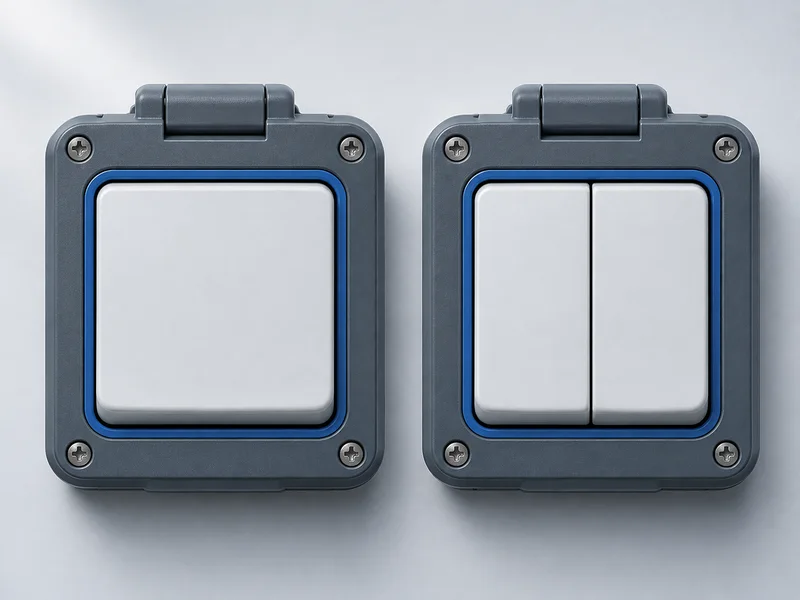
Double-pole, two-gang and two-way are different choices
A two-gang accessory usually provides two independently operated mechanisms, such as one rocker for path lights and one for patio lights. A double-pole mechanism switches two paths together. In British-style terminology, two-way control allows one lighting circuit to be controlled from two locations using the appropriate arrangement.
A one-gang double-pole switch is therefore possible. So is a two-gang product containing single-pole mechanisms. Specify all three attributes on the order sheet and check regional terminology with the supplier.
Check these details before ordering
If you are replacing an existing device, photograph its marking and record the circuit function before selecting a replacement. A matching faceplate is not evidence of matching contacts. Have a qualified installer identify conductors and verify the circuit rather than copying wire positions.
- Supply voltage, frequency and AC/DC duty.
- Contact diagram and identification of the conductors to be switched.
- Load-specific current or power limit, including starting duty.
- Independent controls required versus linked contact operation.
- Installed ingress rating, mounting orientation and cable-entry components.
- Isolation, lock-off and conformity requirements for the intended application.

Frequently Asked Questions
Is a double-pole switch the same as a two-way switch?
No. Double-pole describes two linked switched paths. Two-way, in British-style lighting terminology, describes control from two locations using changeover switching.
Can a double-pole switch control two lights independently?
A basic linked double-pole mechanism switches both paths together. For independent lighting control, specify separate mechanisms, commonly a two-gang accessory, and verify the circuit arrangement.
Are double-pole switches always rated for more amps?
No. Pole count and current rating are separate specifications. Compare the model's voltage and load-specific rating.
Can I replace a single-pole switch with a double-pole switch?
Only after checking the circuit function, available conductors, terminal space, device suitability and local requirements. Treat it as a circuit assessment, not a like-for-like swap based on appearance.
Related Reading
How to Choose Waterproof Switches for Outdoor Electrical Installations
1-Gang vs 2-Gang Waterproof Switches
Waterproof Switch Product Range
References
Schneider Electric contact arrangements: linked DPST mechanism
Legrand switch configurations: gangs, ways and poles
This guide explains general selection principles. Confirm the exact model documentation and local installation requirements for your project.