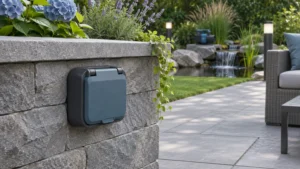
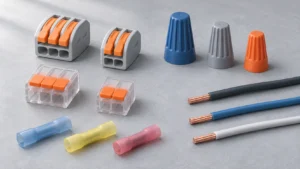
Yes: outdoor sockets generally need an appropriate electric-shock protection arrangement as well as weather protection. A waterproof enclosure and an RCD or GFCI address different hazards. The enclosure limits ingress under specified conditions; the protective device detects certain fault-current conditions and disconnects the supply. Neither makes an unsafe installation acceptable.
For a UK project, discuss the required RCD protection with your electrician. For a US project, specify the applicable GFCI protection and weather-resistant outlet/cover arrangement. Do not transfer a UK residual-current rating or a US device designation into another market without checking its standards and circuit requirements.
Waterproofing Does Not Detect an Electrical Fault
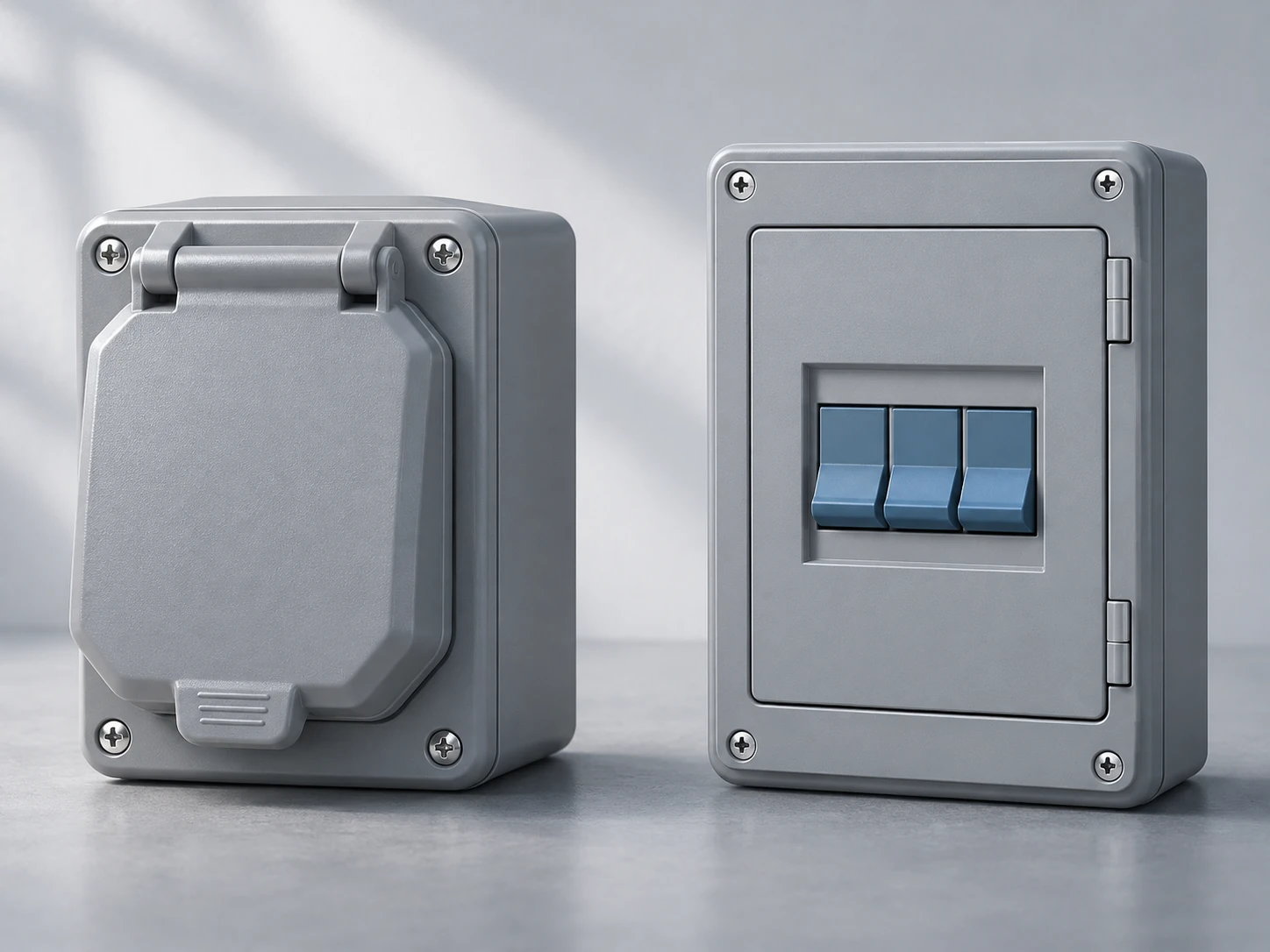
An IP rating describes an enclosure's tested protection against objects, dust and water. It does not tell you whether the circuit detects current escaping its intended path. A damaged appliance or a cut lead can create a hazard even when the socket enclosure remains dry.
Likewise, an RCD or GFCI does not seal the box. Moisture, contamination and corrosion still require investigation. Do not choose a lower level of weather protection because the circuit includes a shock-protection device.
| Protection layer | Its purpose | What it does not establish |
|---|---|---|
| Suitable enclosure and cover | Limits environmental ingress under stated conditions | Shock-protection function or safe operation while open |
| RCD or GFCI arrangement | Provides specified fault-current protection | A dry enclosure or protection against every electrical hazard |
| Overcurrent protection | Protects against the overcurrent conditions for which it is selected | Equivalent personnel ground-fault protection |
| Earthing and bonding where required | Supports the installation's protective measures | Permission to omit the other layers |
Use the waterproof socket selection guide to specify the enclosure independently from the circuit protection.
UK Context: Confirm the RCD Arrangement

An RCD monitors the balance of current in the conductors passing through its sensing arrangement. A sufficient imbalance causes it to trip under its specified conditions. Device type, sensitivity and suitability for the connected equipment form part of the installation design.
Electrical Safety First's garden advice recommends using an RCD with outdoor electrical equipment. Its 2025 landlord guidance for England and Wales identifies 30 mA RCD protection for outlets supplying outdoor equipment. These are UK-context references; the designer must apply the relevant current installation requirements to your particular job.
Protection may be provided upstream or in a suitably specified accessory. You cannot determine coverage simply by looking for a test button on the outdoor faceplate. Ask which device protects the socket and whether the onward circuit, if any, is also covered.
An RCCB and an RCBO have different functions regarding integral overcurrent protection. Avoid buying a device solely because the letters RCD appear in the description. Your electrician should select and coordinate it with the circuit and load.
US Context: GFCI Protection and Weather-Resistant Equipment
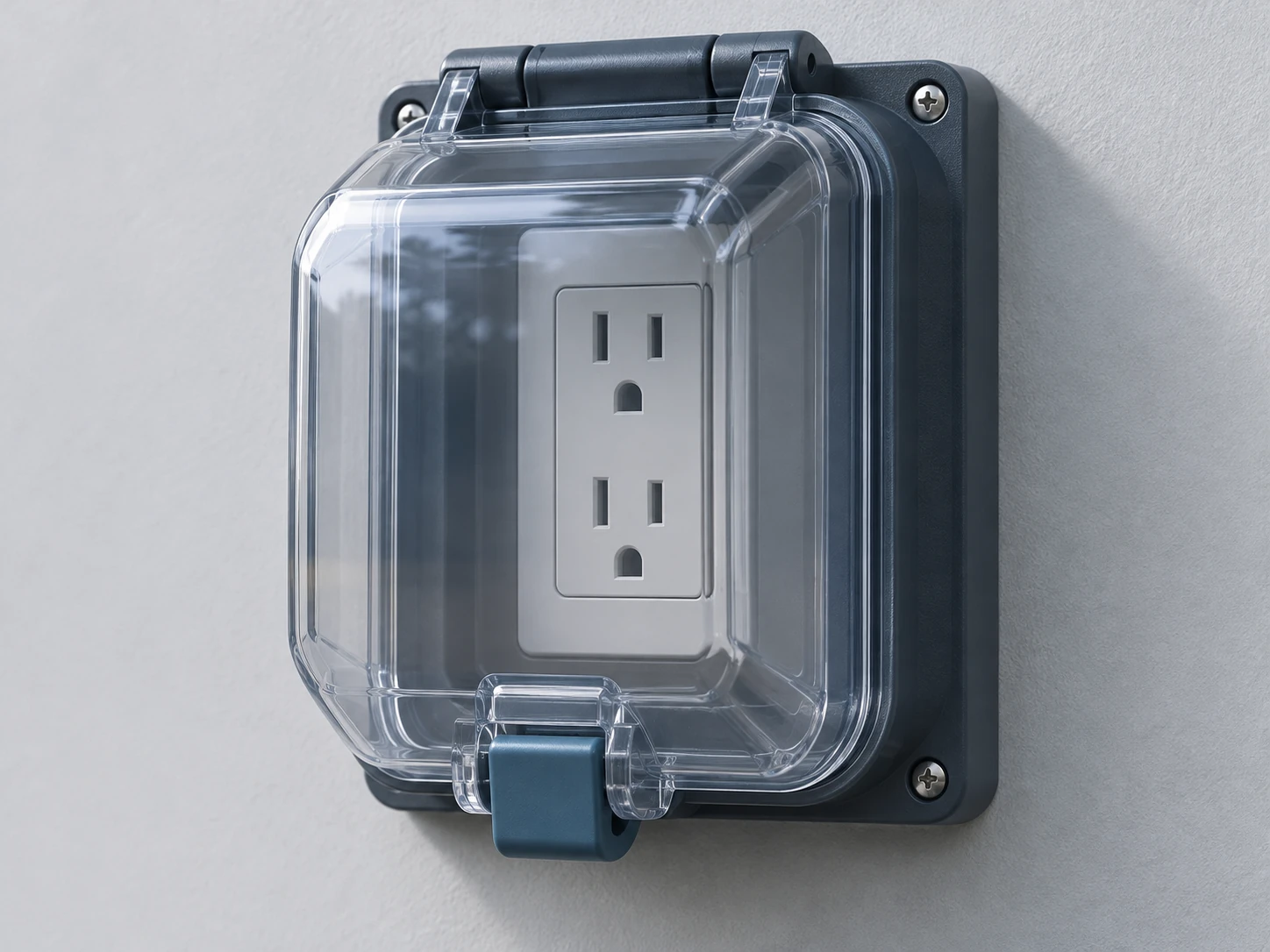
The US Consumer Product Safety Commission's home electrical safety checklist addresses both GFCI protection and weatherproof covers. Its GFCI fact sheet explains the device's role and identifies outdoor receptacles among the locations covered by evolving electrical-code requirements. The sheet is background guidance, not a substitute for the locally adopted code edition.
A GFCI receptacle is one possible implementation; an appropriate upstream GFCI circuit breaker or protected circuit arrangement may serve other installations. Selection depends on the system, device instructions and local requirements. A receptacle with test/reset buttons is not automatically weather-resistant or suitable for every outdoor location.
Choose the outlet, box and cover as a compatible assembly. A while-in-use cover is a separate consideration when a plug remains connected. See whether a socket stays protected with the plug inserted.
Does an Existing Upstream Device Mean You Need No Further Checks?
No. First establish what the device is, what circuit it covers and whether its rating and type suit the intended equipment. A nearby protected socket does not prove that the outdoor outlet is connected to its protected side.
If a second device is proposed, have the electrician consider coordination and the consequences of either device tripping. Two devices in series are not automatically a more selective arrangement. A local test button may improve access to a check, but it does not by itself establish which device will operate first in a fault.
For a hypothetical garden project, suppose lighting and a pump share an outdoor outlet circuit. The useful questions are not simply whether the socket is double or single. Ask which protective device covers both loads, what happens to the pump if another appliance faults, and whether the installation needs a different circuit arrangement. This is a design example, not a recommendation for a particular protection scheme.
Testing and Maintenance Still Matter

Follow the device manufacturer's test-button instructions and testing interval. The test button checks a defined part of the device's operation; it does not verify all the installation's wiring, earthing or environmental protection. Arrange the appropriate professional inspection and circuit tests as required.
If the device trips repeatedly, fails its prescribed test or will not reset, stop treating it as a routine inconvenience. Electrical Safety First's FAQ calls for investigation of recurring RCD trips. Do not hold a reset button, bypass the protection or reconnect wet equipment to an unprotected supply.
When discussing BDDKG waterproof sockets, specify your destination market, plug system, circuit voltage, load and required protection. A published IP66 enclosure description does not confirm that an RCD or GFCI is incorporated in the ordered socket.
Frequently Asked Questions
Does a waterproof socket include an RCD?
Not necessarily. Some accessories incorporate a protective device; others rely on an appropriate upstream arrangement. Check the exact model and circuit documentation rather than assuming that waterproof means RCD-protected.
Is a circuit breaker the same as a GFCI?
No. An ordinary overcurrent circuit breaker and a personnel GFCI have different purposes. Some circuit breakers include GFCI functionality, but that must be an identified product feature, not an assumption based on location in the panel.
Can a plug-in RCD or GFCI make any outdoor socket safe?
No. A suitable portable device can provide a defined protective function when used as instructed, but it cannot repair damaged wiring, provide missing weather protection or establish compliance of a fixed installation. It also needs an environment and supply for which it is intended.
Why does an RCD trip when an outdoor socket is wet?
Moisture can contribute to leakage current, but a trip does not identify the failed component. The fault may be in an appliance, cable, accessory or another part of the protected circuit. Use the rain-related tripping guide and arrange competent investigation.
Sources checked 17 November 2026; no jurisdiction-wide compliance approval is implied.