Choose a single-throw knife switch when each pole only needs to make or break one circuit path. Choose a double-throw knife switch when each common pole must select between two alternative paths. Then separately verify pole count, operating positions, switching duty and isolation suitability.
“Double throw” does not mean “double pole,” does not automatically include a center-OFF position, and does not by itself establish approval for generator transfer. These distinctions prevent ordering the right current rating in the wrong configuration.
What single throw and double throw mean
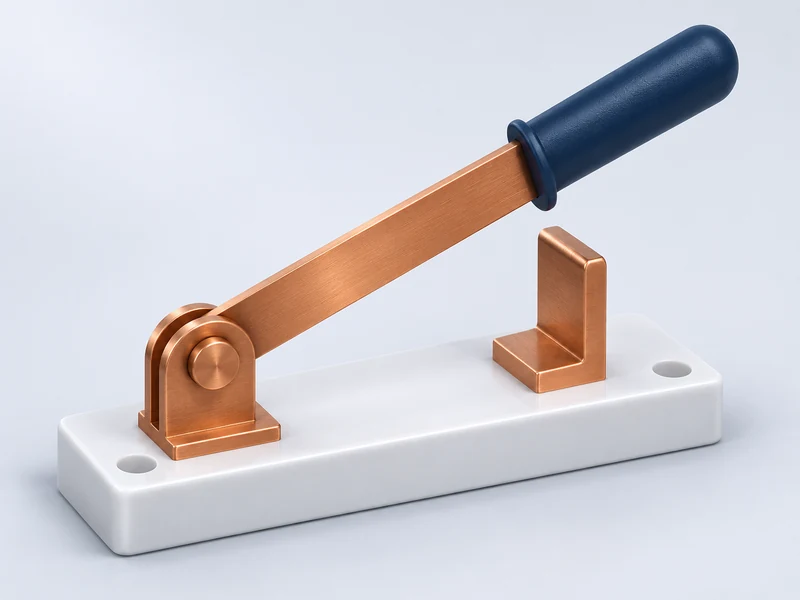
A single-throw switch provides one selectable connection path per pole. Opening it breaks that path; closing it completes it. A double-throw switch provides two alternative destinations for the common contact of each pole.
The FAA’s Airframe and Powerplant Mechanics General Handbook illustrates the pole-and-throw terminology. It is used here for the general circuit definitions, not as an industrial installation approval.
| Configuration | Separate poles | Alternative paths per pole | Typical functional purpose |
|---|---|---|---|
| SPST | One | One | Make or break a single path |
| DPST | Two | One | Make or break two paths together |
| SPDT | One | Two | Select one of two destinations |
| DPDT | Two | Two | Select paired alternative paths together |
| 3P or 4P double throw | Three or four | Two | Multi-conductor changeover, subject to the approved design |
The number of poles tells you how many separate conductors operate together. The throw count tells you where each pole can connect. These are independent choices; neither determines the current rating.
When a single-throw knife switch fits
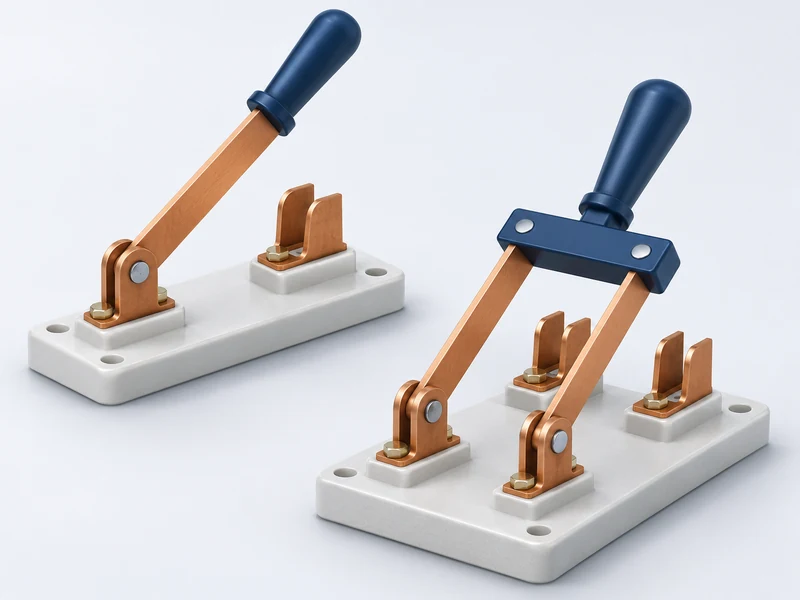
A single-throw arrangement suits a circuit that needs one defined ON/OFF path, such as a specified feeder isolation point. Select the pole count from the system design and choose a device with the required operational and isolation ratings.
A four-pole single-throw switch is still single throw. It switches four separate paths together; it does not provide four source choices. Likewise, a DPST switch cannot select between two sources merely because it has two poles.
When a double-throw knife switch fits
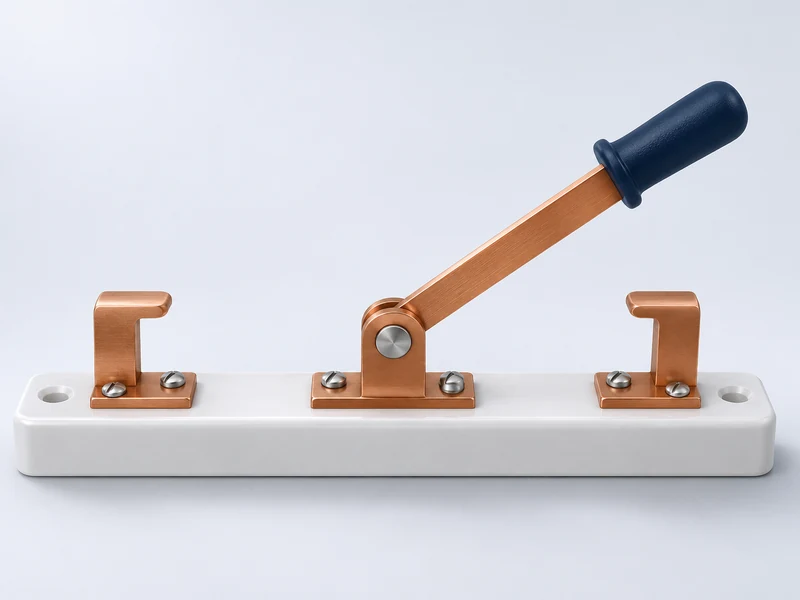
A double-throw arrangement can select between two alternative circuits or sources, provided the complete device and installation are rated and approved for that use. Ask for the common-terminal designation and operating-state diagram rather than assuming a terminal’s role from its physical position.
Review whether a center-OFF position exists, whether it can be secured, and how the contacts transition between positions. Break-before-make and make-before-break are different behaviors. A general description such as “changeover” does not replace the manufacturer’s transition specification.
Does double throw mean it can transfer a generator supply?
No. A generator arrangement needs more than the correct contact count. The design must address source separation, transition behavior, neutral and earthing requirements, fault coordination, voltage and load duty, and applicable transfer-equipment approval.
The knife-switch catalogue from Filnor includes double-throw devices identified as non-load-break. This illustrates why a second throw is a configuration feature, not proof of load-transfer capability.
Avoid substituting two unrelated single-throw switches for approved transfer equipment. A drawing that permits unintended source paralleling or backfeed is not corrected by attaching a different label to the handles.
A specification checklist before you order
- Define whether you need ON/OFF isolation or selection between two paths.
- List the conductors that the electrical design requires to be switched.
- Specify center-OFF and lockability if required.
- Request the operating-state and transition diagrams.
- Confirm AC/DC operational ratings and load-breaking duty.
- For source transfer, identify the required transfer-equipment approval and protection conditions.
- Check mounting orientation, guarding and operating clearance.
For US workplaces, OSHA 1910.305(c) includes mounting and connection requirements for knife switches. Apply the rules relevant to your installation; a diagram showing the blade position does not settle every mounting or supply-connection requirement.
Browse BDDKG’s single- and double-throw configurations and compare the wider changeover switch options. The complete knife switch guide provides background on the device family. Request the exact model drawing before approving a purchase.
Frequently asked questions
What is the difference between single throw and double throw?
Single throw provides one connection path per pole. Double throw provides two alternative destinations for each common pole. Pole count is a separate specification.
Is double pole the same as double throw?
No. Double pole means two separate conductors are switched together. Double throw means each common pole can select between two alternative paths. A device can be double pole and single throw, or double pole and double throw.
Does a double-throw knife switch have an OFF position?
Some models have a center-OFF position; others do not. Check the documented operating positions, transition behavior and whether the required open state can be secured.
Can I use a double-throw knife switch as a transfer switch?
Only when the exact assembly and installation meet the required transfer, load-switching, protection and approval requirements. Double-throw construction alone is insufficient.
Which is better: single throw or double throw?
Choose the function your circuit needs. Single throw fits one ON/OFF path per pole; double throw fits selection between two paths. Neither configuration is inherently better or automatically higher-rated.