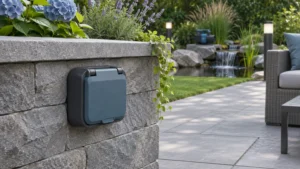
Choose an outdoor lighting switch by identifying the lighting zones you want to control, the LED drivers or other loads it must switch, and the weather exposure at the mounting point. Then match the mechanism, electrical rating and sealed enclosure to those requirements. Buying the highest IP number does not resolve the lighting-control design.
Map your lighting zones before choosing the switch
Start with how the space will be used after dark. Entrance lights may operate every evening, path lights may follow a timer, and patio task lights may need manual control only when the area is occupied. Put lights that should operate together into a zone.
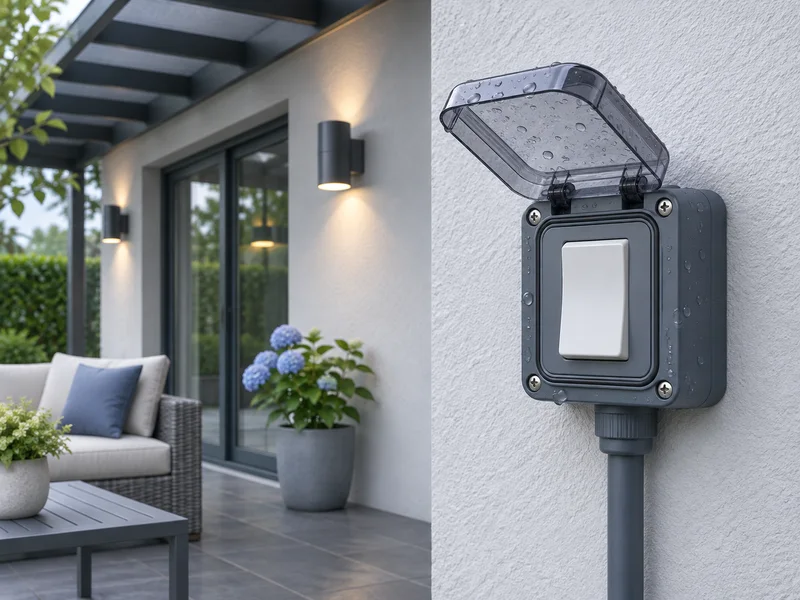
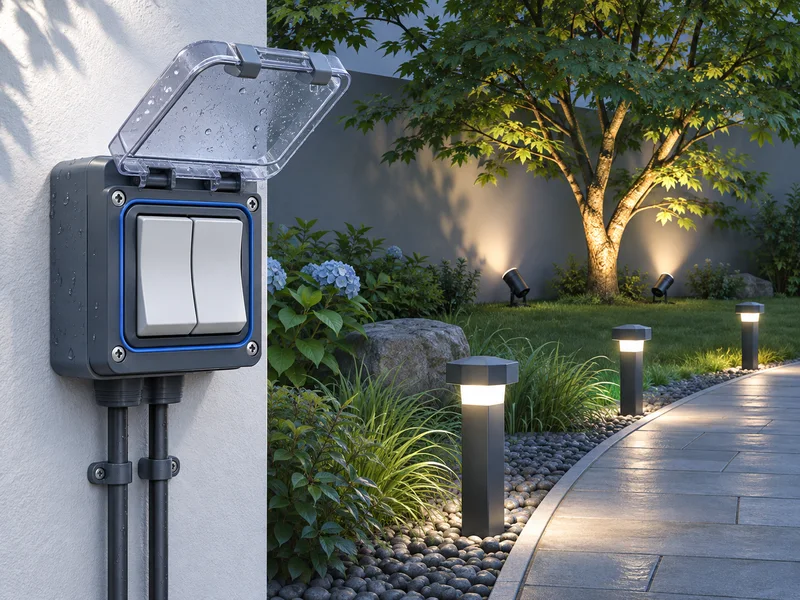
For one manually controlled zone, a suitable one-gang accessory may be sufficient. For two independently operated zones at the same point, consider two gangs. If the same zone must be controlled at both the house door and a gate, specify the appropriate two-location arrangement rather than merely buying a two-gang faceplate.
| Lighting task | Control decision |
|---|---|
| One entrance lighting group | One suitable control mechanism |
| Path lights separate from patio lights | Two independent controls or a designed control system |
| Same lights from two entrances | Compatible multi-location switching |
| Automatic dusk or scheduled operation | Outdoor-rated sensor/timer arrangement with planned manual override |
| Large bank of LED drivers | Check inrush and consider rated relay/contactor switching |
Match the switch to the LED driver load
List driver model, quantity, supply voltage and input-current information for each zone. Drivers switched together can create a short startup peak even where total running power looks modest. Use documented LED-load capability or obtain application confirmation.
For example, twelve hypothetical 20 W fittings total 240 W of advertised lamp power. That figure alone does not establish driver input current or startup stress. The driver's own data and the switch manufacturer's LED limits are the basis for selection.
If you want dimming, choose a compatible dimming control and dimmable driver combination. A standard weatherproof on/off rocker does not become a dimmer because it controls LED lights.
Select the enclosure for the mounting location
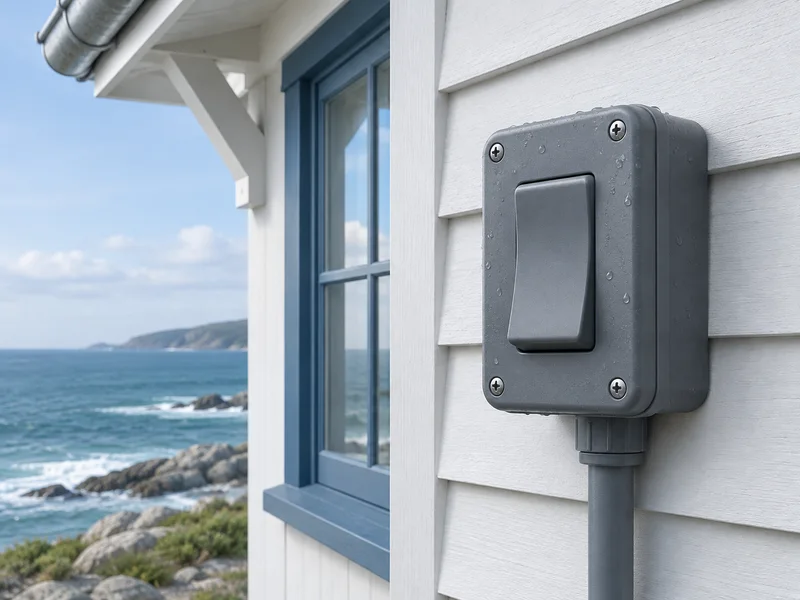
Assess wind-driven rain, irrigation, roof runoff and cleaning exposure at the switch itself. A location under a roof can still receive sideways rain. Confirm that the switch is intended for outdoor use in its installed orientation, with the chosen entries and cover condition.
IP66 is commonly offered for outdoor wall-switch ranges, but do not treat it as approval for permanent immersion or every cleaning process. UV exposure, impact and coastal corrosion require separate consideration. Ask for evidence relevant to the material and environment rather than extending an IP claim.
Technical reference: IEC: lighting environments and ingress protection.
Decide where mains switching belongs
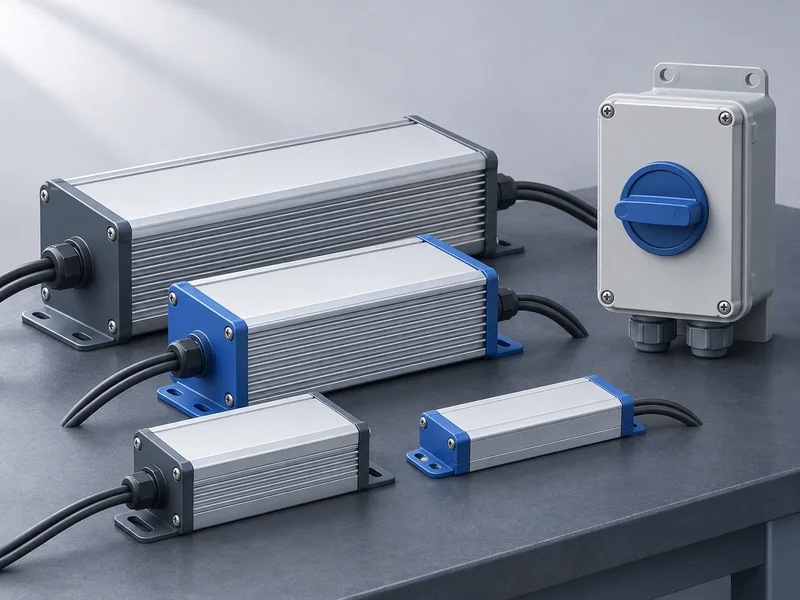
Outdoor lighting may use mains-fed luminaires or a low-voltage system supplied through a driver or transformer. Identify whether your switch operates the mains input, a low-voltage output or a dedicated control input. These arrangements require different ratings and compatible equipment.
Do not move a mains-rated mechanical switch onto a DC LED output simply because the voltage is lower. Check the DC switching duty and the lighting system's instructions. Keep drivers accessible in locations and enclosures approved for their environmental and thermal requirements.
Plan indicators, access and maintenance
An indicator can help you locate a switch or see its commanded state, but its wiring and meaning depend on the model. It may need neutral. Some indicator arrangements interact with low-power electronic loads, so confirm compatibility if lamps glow or flicker when off.
Position the switch where users can reach it without crossing wet planting beds or handling it from an unsuitable location. Keep access for inspection and replacement. Pools, fountains and other special locations require a location-specific electrical design; a general outdoor switch selection is not enough.
Send a lighting-specific inquiry
Use that information to compare suitable models and request samples. Have the installer coordinate the switch with circuit protection, earthing, wiring methods and any RCD/GFCI requirements. Weather sealing is one part of the lighting installation.
- Destination market and supply voltage.
- Lighting zones and control locations.
- Driver models, quantity and input/startup data per zone.
- On/off, dimming, timer or sensor control required.
- Exposure, mounting orientation and cable-entry plan.
- Indicator requirement, neutral availability and maintenance access.
Frequently Asked Questions
Do outdoor light switches need to be waterproof?
They need protection suitable for their installed exposure and must be intended for that environment. Ordinary indoor switches should not be left exposed outdoors.
Can I use a waterproof switch with LED lights?
Yes, if its documented electrical duty suits the driver load and quantity. Check LED inrush, any separate lamp-load limit and indicator compatibility.
Can one outdoor switch control several lights?
Yes, when they form one control group and the full load remains within the switch's documented limits. Count driver input characteristics, not just lamp quantity.
Can I use a normal dimmer outdoors?
Only if the complete product or manufacturer-approved assembly is suitable for the outdoor environment and compatible with the lighting load. An indoor dimmer with an improvised cover is not enough.
Related Reading
1-Gang vs 2-Gang Waterproof Switches
Waterproof Switch Current Ratings
Waterproof Junction Boxes for Outdoor LED Lighting
References
IEC: lighting environments and ingress protection
Electrical Safety First: outdoor installations and garden safety
Omron component FAQ: application-dependent inrush and actual-load evaluation
This guide explains general selection principles. Confirm the exact model documentation and local installation requirements for your project.