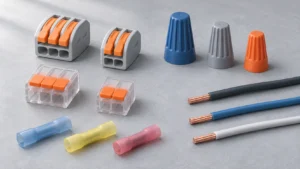
Choose an outdoor waterproof socket by checking five things together: the destination plug standard, connected load, water exposure, protection with the plug inserted and the complete installation method. Start with the job you need the outlet to perform, then select a documented assembly. Choosing by an IP number or outlet count alone leaves important compatibility questions unanswered.
This guide helps you prepare a usable purchasing specification. It does not prescribe cable sizes or circuit modifications; fixed mains work and verification require appropriately qualified personnel.
Start With the Equipment and Plug System
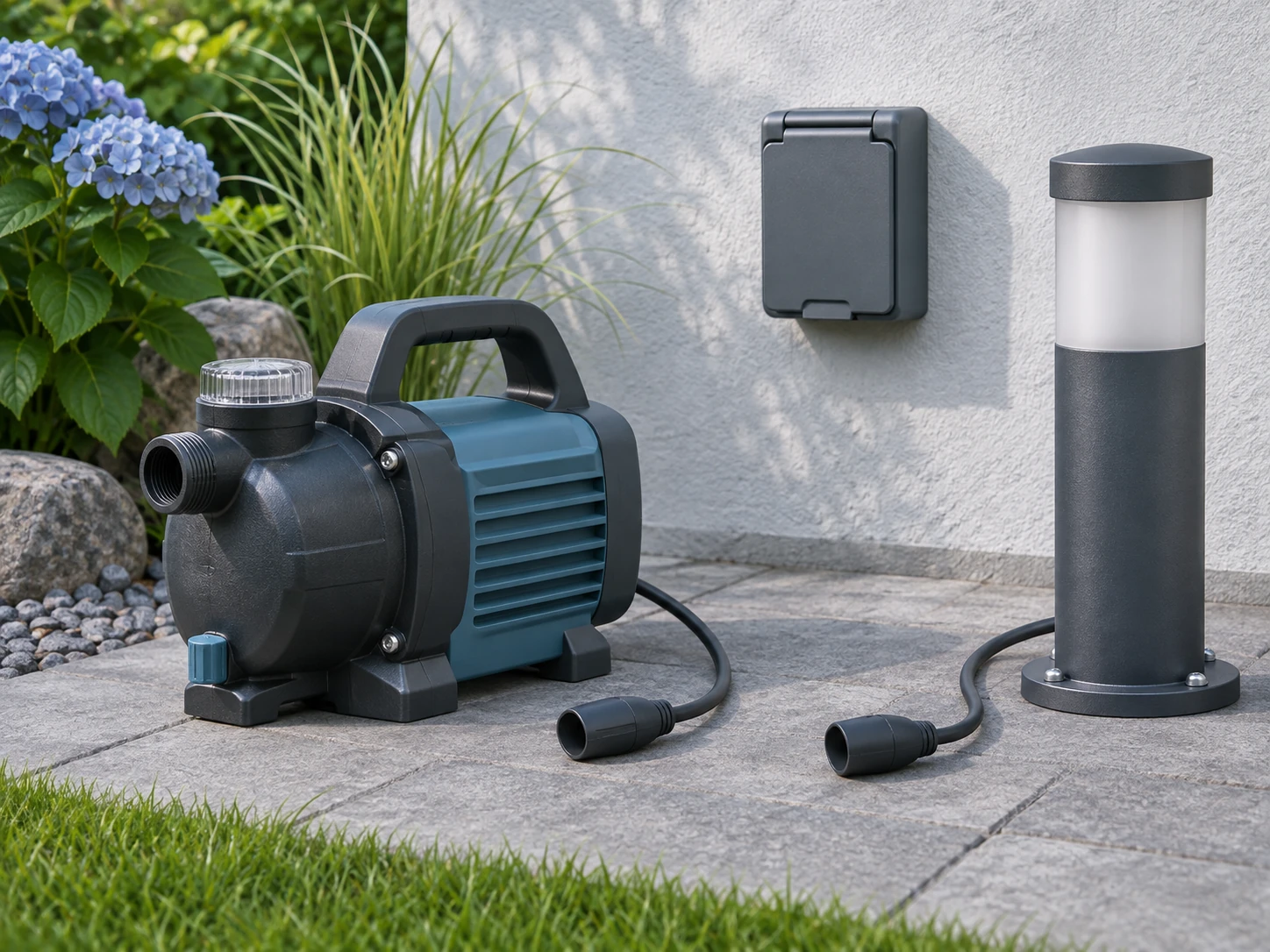
Record what will be connected and where it will be used. A socket for an occasional garden tool has different practical demands from one supplying equipment that remains connected through the seasons. Identify equipment nameplate data, the actual plug and the destination market before comparing enclosures.
Plug compatibility includes the contact system, earthing arrangement and applicable electrical ratings. Similar-looking holes or an adaptor that physically fits do not establish suitability. Do not describe every covered socket as a universal outlet.
For a double unit, assess simultaneous use. Two appliances share some part of the upstream supply, and the number of outlets does not establish the combined rating. Read our single vs double comparison if outlet count is your main decision.
Describe the Exposure Precisely
An outlet beneath an overhang can still encounter wind-driven rain. A socket on a garden post may face sprinklers, tool impacts and cable pulls. A washdown area introduces a cleaning procedure that ordinary rain exposure does not describe.
| Location or activity | Detail to include in the specification | Separate concern |
|---|---|---|
| Covered patio | Rain direction and shelter limitations | Plug and cable clearance |
| Exposed garden wall | Wind-driven rain and direct sunlight | Outdoor material suitability |
| Near irrigation | Sprinkler direction and frequency | Whether equipment remains connected |
| Cleaning area | Actual jet and cleaning method | Chemical and temperature compatibility |
| Flood-prone position | Expected standing water | Relocation or a different system |
Choose a location that keeps the connection accessible and away from likely standing water where the installation permits it. Do not treat a flood-prone depression as a routine outdoor outlet position that can be solved simply by increasing the IP number.
For broader background, see the complete waterproof socket guide.
Match the Rating to the Water Event

An IP declaration describes specified ingress tests. It does not by itself establish sunlight resistance, salt resistance, electrical capacity or suitability for permanent immersion. Request the exact model's installation restrictions and supporting information.
Keep dust and water protection separate when comparing IP44, IP55, IP66 and IP67. Most importantly, do not replace a requirement for jet resistance with an unrelated immersion claim. Our socket IP-rating comparison explains how those tests differ.
A manufacturer may offer several protection levels within one range, or apply a rating only with specified accessories. KRIPAL's socket information illustrates configuration-specific protection and mating requirements. Its statements apply to its named products; they do not establish how a BDDKG assembly performs.
Check Protection While the Socket Is in Use
Bring the actual plug dimensions into the selection process. A cover can close over one ordinary plug and fail to latch over a plug-in power supply. Twin outlets can introduce a second clearance problem when both positions are occupied.
Ask the supplier to identify the permitted operating configuration. Does the lid surround the plug? Is a particular mating plug necessary? How does the cable exit without crossing the gasket incorrectly? Is the mounting direction restricted?
The critical distinction is between protection when the empty socket is capped and protection when it supplies equipment. Read whether waterproof sockets remain protected with a plug inserted for a dedicated compatibility checklist.
Check the Electrical and Protective Arrangements
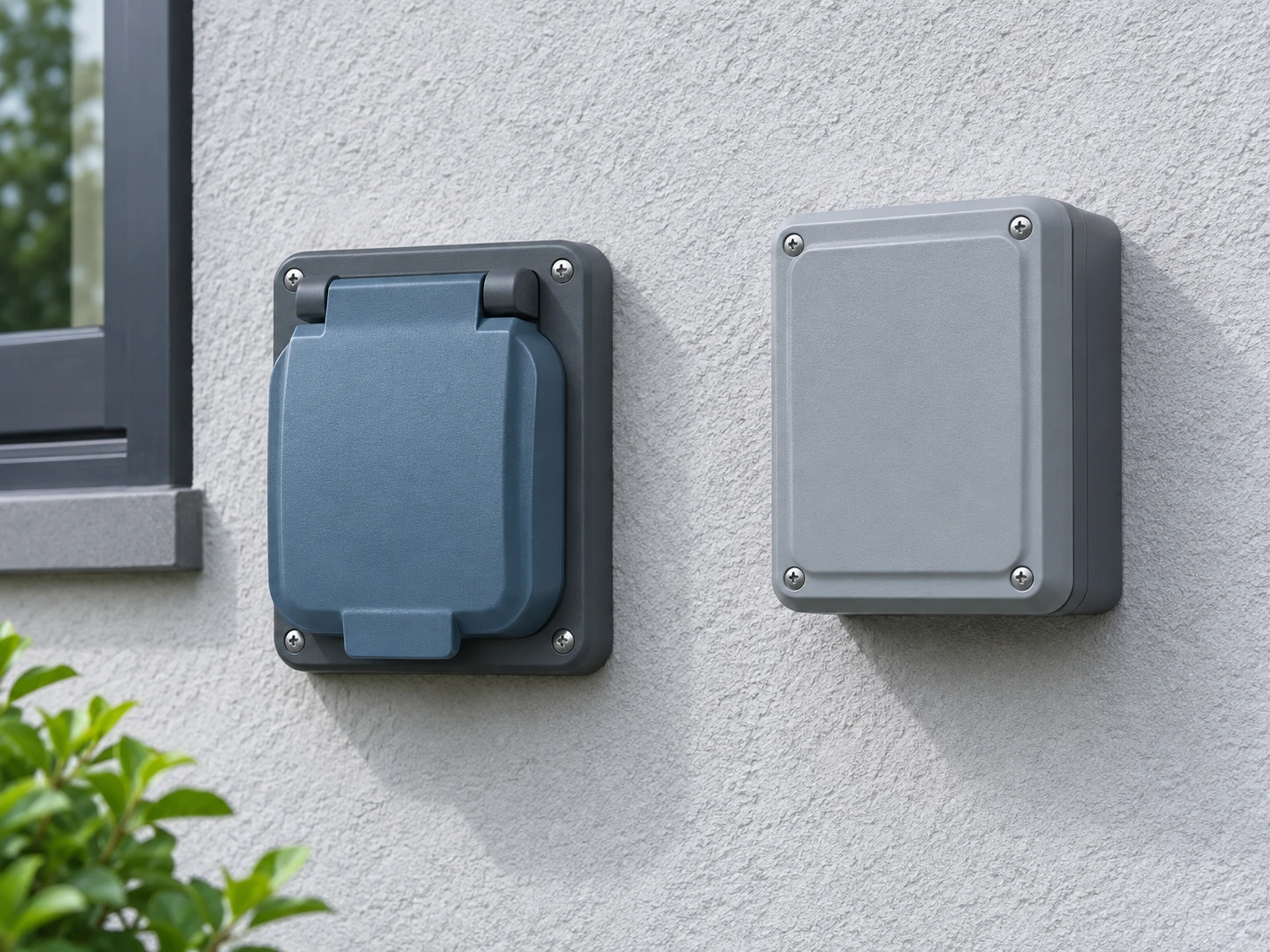
Record the rated supply voltage and equipment load, then confirm the socket's permitted duty. A higher current marking does not establish a suitable plug standard or switching function. Motor starting, prolonged loads and the connected equipment's instructions can require additional assessment.
Decide whether local switching is useful, but do not assume every switched socket provides the isolation arrangement your project requires. Use the switched vs unswitched guide to separate local operation from the circuit's protective functions.
For UK garden installations, NICEIC's guidance identifies RCD protection as an outdoor socket consideration. Other markets use their own requirements, terminology and approved devices. Have the actual circuit assessed instead of assuming an IP-rated housing provides shock protection. See our RCD and GFCI comparison.
Specify the Cable Entry and Mounting
The seal must fit the cable actually supplied. Provide its outside diameter, construction and approach direction, not just conductor area. Confirm the permitted entry thread or hole, sealing accessories and unused-entry closures.
Check mounting access and cable support before ordering. A cover that hits a downpipe or a gland forced sideways against a wall can make a good product unsuitable for that position. The installation should preserve access for inspection and replacement without making cable loads the responsibility of the socket contacts.
Follow the manufacturer's drilling and fixing provisions. Do not add arbitrary drainage holes or seal every seam with silicone as a substitute for the specified assembly. Our installation guide covers these checks without inventing a model-specific tightening schedule.
Worked Example: Two Connections on a Garden Wall
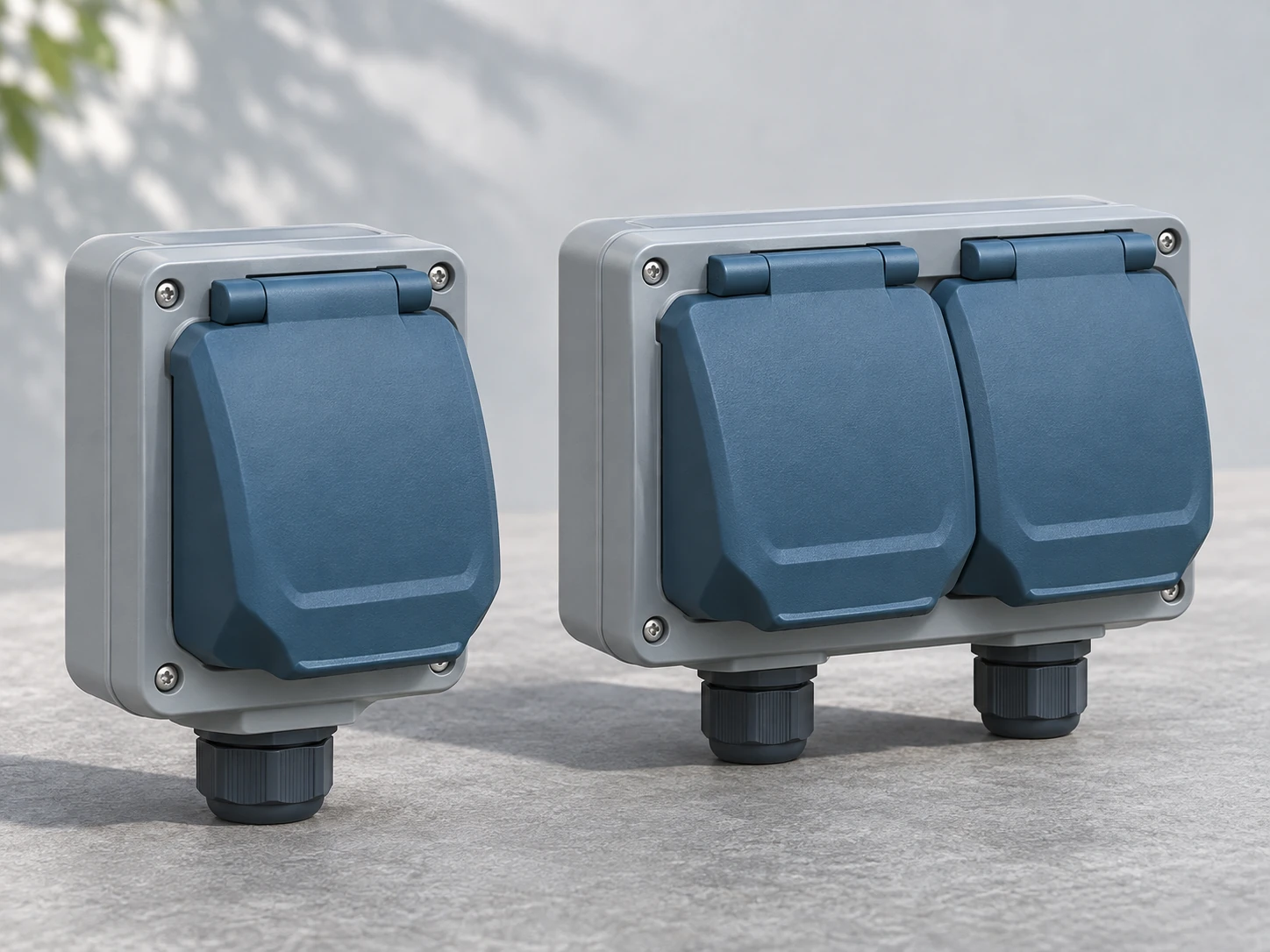
Suppose you need one connection for outdoor lighting and another for a pump. The position is above ground on an exposed wall, and both appliances may remain connected. This is an illustrative selection brief, not a tested installation or a circuit design.
The BDDKG double-socket box offers two outlets in a wall-mounted enclosure with a hinged protective cover and a published IP66 enclosure rating. That makes it a physical candidate. It does not establish that both actual plugs fit, that the declared protection applies while connected, or that the electrical rating supports your combined load.
Send the supplier the two plug dimensions, equipment nameplate data, cable details and exposure description. Request the exact variant's drawing, ratings and in-use protection conditions. If only one connection is needed, compare the single-socket version instead. These product fields were reviewed on 17 November 2026.
Frequently Asked Questions
What IP rating does an outdoor socket need?
There is no single answer for every site. Match the documented protection to the water exposure and check outdoor suitability and operating configuration separately.
Is IP66 better than IP44 outdoors?
IP66 declares different and more demanding dust/jet protection, but suitability still depends on the exact model, accessories and use. It is not an unlimited-weather or immersion guarantee.
Can I use a normal indoor socket with an outdoor cover?
Only if the complete assembly and wiring method are documented and permitted for the location. A generic cover does not automatically convert any indoor accessory into an outdoor system.
Should an outdoor socket be switched?
Choose local switching when it helps operate the equipment, then verify the switch function and ratings. It does not replace required protective devices or a safe isolation procedure.
Selection examples are assumptions, not customer case studies or product test results.