Yes, some connection systems can be installed underground, but you should not bury a junction box simply because it is labelled waterproof or IP68. The exact enclosure, cables, glands and jointing method must be documented for the intended installation, and local rules on access, protection and underground wiring must be satisfied.
First distinguish direct burial in soil from installation inside an accessible underground chamber. Both can involve water, but they create different mechanical and maintenance conditions.
Direct Burial and Underground Chambers Are Different
| Installation | Main exposures | What you need to establish |
|---|---|---|
| Direct burial in soil | Moisture, soil pressure, chemicals and mechanical damage | A system specifically suitable for direct burial and the permitted wiring method |
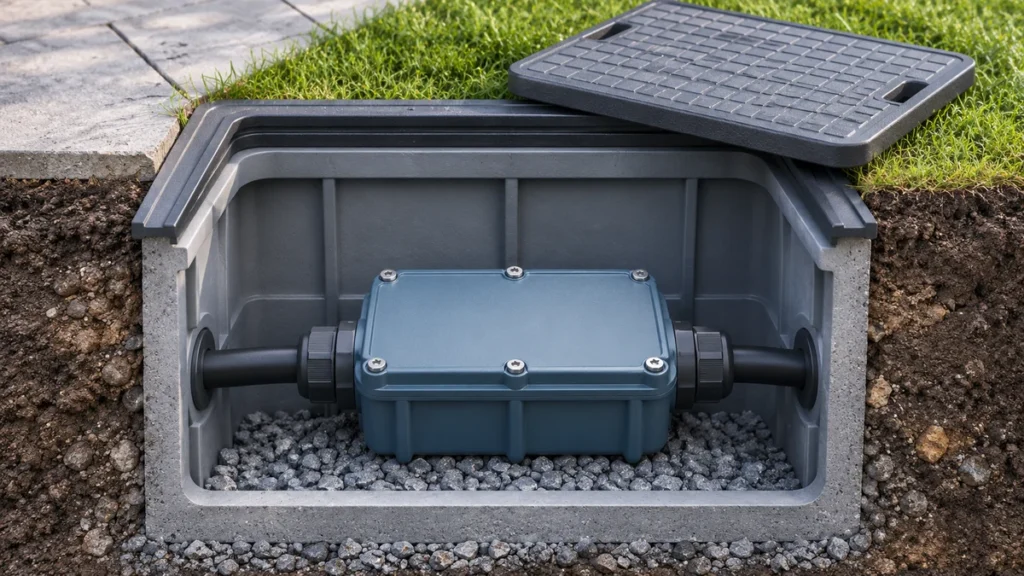
| Accessible chamber or handhole | Flooding, condensation, cable movement and maintenance access | Appropriate connection protection under the actual chamber conditions |
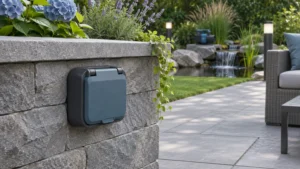
| Raised above-ground box | Rain, sunlight and impact | Outdoor suitability and mounting conditions; it may avoid a burial requirement |
A chamber is not necessarily a dry location. Water can enter through the cover, surrounding soil or connected ducts. Evaluate the likely water level and duration rather than assuming that a removable lid keeps the joint dry.
For a broader explanation of enclosure ratings, see our complete waterproof junction box guide.
Why IP68 Alone Is Not Direct-Burial Approval
IP68 describes an ingress-protection category under stated immersion conditions. It does not independently establish resistance to soil loading, excavation damage, roots, chemicals or every long-term underground condition.
Ask the manufacturer for the actual permitted depth, duration, orientation and assembly details. Then ask separately whether direct burial is an intended application. An immersion test on an empty enclosure also does not prove that an improvised cable-entry combination meets the same performance.
Do not convert an IP-only claim into a NEMA Type designation or a local installation approval. These are different specifications that require their own evidence.
Compare Documented Burial Suitability With an IP-Only Listing
The BDDKG M686-2 listing publishes IP68, 0.5–4.0 mm² conductor section, and M20 cable options of 5–9 mm or 9–12 mm. Its public parameter table does not state an immersion depth/time or establish the complete configuration's direct-burial suitability. Cable and conductor fit therefore cannot settle the burial question.
For comparison, the manufacturer HENSEL WP 0202 G datasheet provides explicit application boundaries: a 93 × 93 × 62 mm enclosure, rated insulation voltage 690 V, rated current 20 A, IP68 testing stated as 20 m / 168 h, and suitability for mounting in soil without traffic loads. It includes potting compound and model-specific connection data. These claims apply to that HENSEL system and its specified assembly, not to BDDKG boxes with the same IP digits.
| Evidence needed | Why it changes your selection |
|---|---|
| Immersion depth and time | Allows comparison with the anticipated flood event; does not prove unlimited underwater life |
| Explicit in-soil application | Addresses a different question from water exclusion alone |
| Complete jointing instructions | Identifies the connectors, entries and encapsulation required for the rated system |
| Mechanical limits | “Without traffic loads” cannot be extended to a vehicle route |
Worked Example: A Chamber That May Flood
Suppose your site assessment anticipates 0.5 m of standing water for up to 48 hours. The documented HENSEL test numbers exceed those two numerical inputs, making that system worth examining further. They do not by themselves approve the job: installation orientation, cable compatibility, compound preparation, temperature, local wiring rules and access still need checking.
With the public BDDKG listing alone, the same comparison cannot be completed because the depth/time and burial documentation are missing. Your practical options are to obtain suitable model-specific evidence, select a documented underground joint system, or relocate the connection above the anticipated water level. Do not convert the 20 m / 168 h test into a burial-depth instruction.
For the above-ground alternative, use the outdoor selection guide. If a chamber is already wet, use the water-ingress investigation guide before returning the circuit to service. Product documents reviewed on 14 November 2026.
Choose a Joint System for the Intended Environment

Some underground applications use a complete gel or resin joint kit rather than a reusable gasketed box. The kit may rely on specified connectors, preparation, filling and curing procedures. Those details are part of its performance.
Check cable compatibility, conductor range, connector type, voltage rating and any restrictions on later access. A re-enterable gel system and a cured resin joint can involve different maintenance procedures; do not assume either can be opened and resealed like an ordinary cover.
HENSEL identifies specialized connection systems for underwater and in-ground use. That product distinction shows why a general outdoor box should not be treated as an interchangeable underground joint.
Encapsulation does not remove the need for cable restraint or correct electrical connections. It also cannot turn an unapproved connector into a suitable buried joint.
Plan for Water Inside the Chamber

Consider water arriving from heavy rainfall, seasonal groundwater or connected ducts. A chamber that drains during normal weather may still flood during a storm.
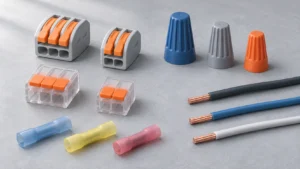
Review the complete connection path: cable jackets, entries, connectors and the enclosure or joint shell. Cables and accessories must be suitable for the wet conditions they will actually encounter. Do not assume that ordinary indoor pre-insulated connectors become suitable because they sit inside a handhole.
Greaves' underground-connector FAQ addresses the distinction between standard connectors and connectors suitable for underground wet conditions. Verify the exact connector listing or approval required for your project.
Check Whether You Can Keep the Connection Above Ground

Moving a connection to a suitable accessible above-ground location may simplify inspection and reduce exposure to standing water. Assess whether cable routing, protection and the equipment arrangement allow this before specifying a buried connection.
If the joint must remain below ground, provide the required access or use a wiring method that is specifically permitted without routine access. Do not apply a blanket rule that all buried joints are acceptable or that none are acceptable; the local code, system and approved method determine the answer.
Where vehicle loading or public access is involved, the chamber and cover also need a separate mechanical assessment. The joint enclosure's IP rating says nothing about a traffic-rated cover.
What to Ask Before Ordering

Send the supplier a requirement sheet that includes:
- Direct burial or accessible chamber, with a drawing of the location.
- Expected flooding depth and duration, groundwater conditions and soil information.
- Cable construction, outside diameter, conductor sizes and circuit voltage.
- Required connectors, mechanical restraint and protection from damage.
- Access, repair and replacement requirements.
- Applicable local approvals, installation method and documentation needs.
Ask for the complete installation instructions, not just an ingress-rating certificate. If resin is involved, check storage conditions, mixing procedure, working time and curing requirements for the kit. If a gel kit is re-enterable, confirm the permitted reopening and resealing procedure.
Review the BDDKG junction box range as a starting point, then request confirmation of the exact underground application. Do not assume every product in a waterproof category is intended for burial.
Installation and Maintenance Considerations
Have a qualified person select and install the underground wiring method. Establish the required route protection, separation, identification and electrical verification before the joint is concealed.
Retain location records and the kit identification. Check how a failed joint could be replaced without damaging adjacent cables. If a chamber is used, maintain safe access and inspect it according to the installation's maintenance plan.
Avoid using a casual hose test as evidence of suitability. Short-term water exclusion on site cannot establish long-term burial performance or certify an altered assembly.
Frequently Asked Questions
Can an IP68 junction box be buried directly in soil?
Only if the exact system is documented for direct burial and the wiring method is permitted locally. IP68 alone is insufficient. The BDDKG listing reviewed here does not provide the depth/time and burial documentation needed to make that selection; the HENSEL example demonstrates the additional evidence to request.
Can a junction box be installed inside a handhole?
Potentially, with a connection system appropriate to the chamber's actual wet and mechanical conditions. Maintain the access and protection required by the applicable wiring rules.
Do underground junction boxes fill with water?
Some chambers can flood or collect condensation. Design for the assessed exposure rather than assuming drainage will always keep the connection dry.
Is a resin-filled joint waterproof forever?
No generic lifetime claim is justified. Performance depends on the specified kit, installation, cable compatibility and exposure. Follow the manufacturer's service and application limits.
Can I bury a box after sealing it with silicone?
Adding silicone does not establish direct-burial approval. Use a documented connection system and permitted installation method rather than trying to convert a general-purpose box on site.
Can ordinary insulated connectors be used in a flooded handhole?
Do not assume so. Greaves' underground-connector FAQ distinguishes ordinary pre-insulated connectors from systems designed for burial or submersion. Select the exact documented connector/joint system for the cable and environment, even when the handhole itself remains accessible.